【 XR INDUSTRY EVENT 】Showcase: The Clouds Are Two Thousand Meters Up
2025.10.25
- Panelists
- Director of The Clouds Are Two Thousand Meters Up|Singing CHEN
- VR Supervisor of The Clouds Are Two Thousand Meters Up|Ming-Yuan CHUAN
- Lead Programmer and Visual Supervisor of The Clouds Are Two Thousand Meters Up|Yujie HUANG
- Moderator
Curator of XR DREAMLAND| Kuan-Jen WANG
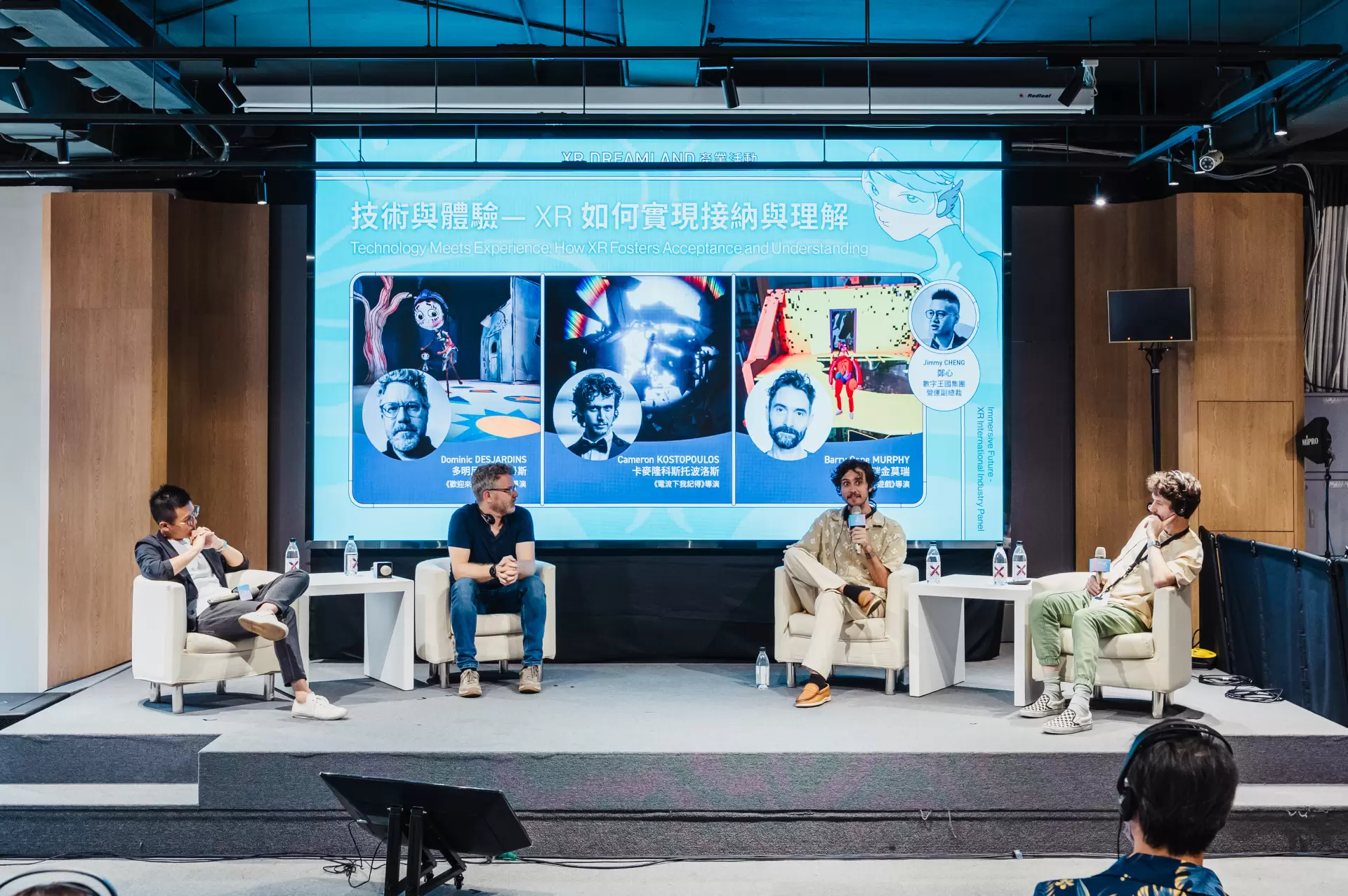
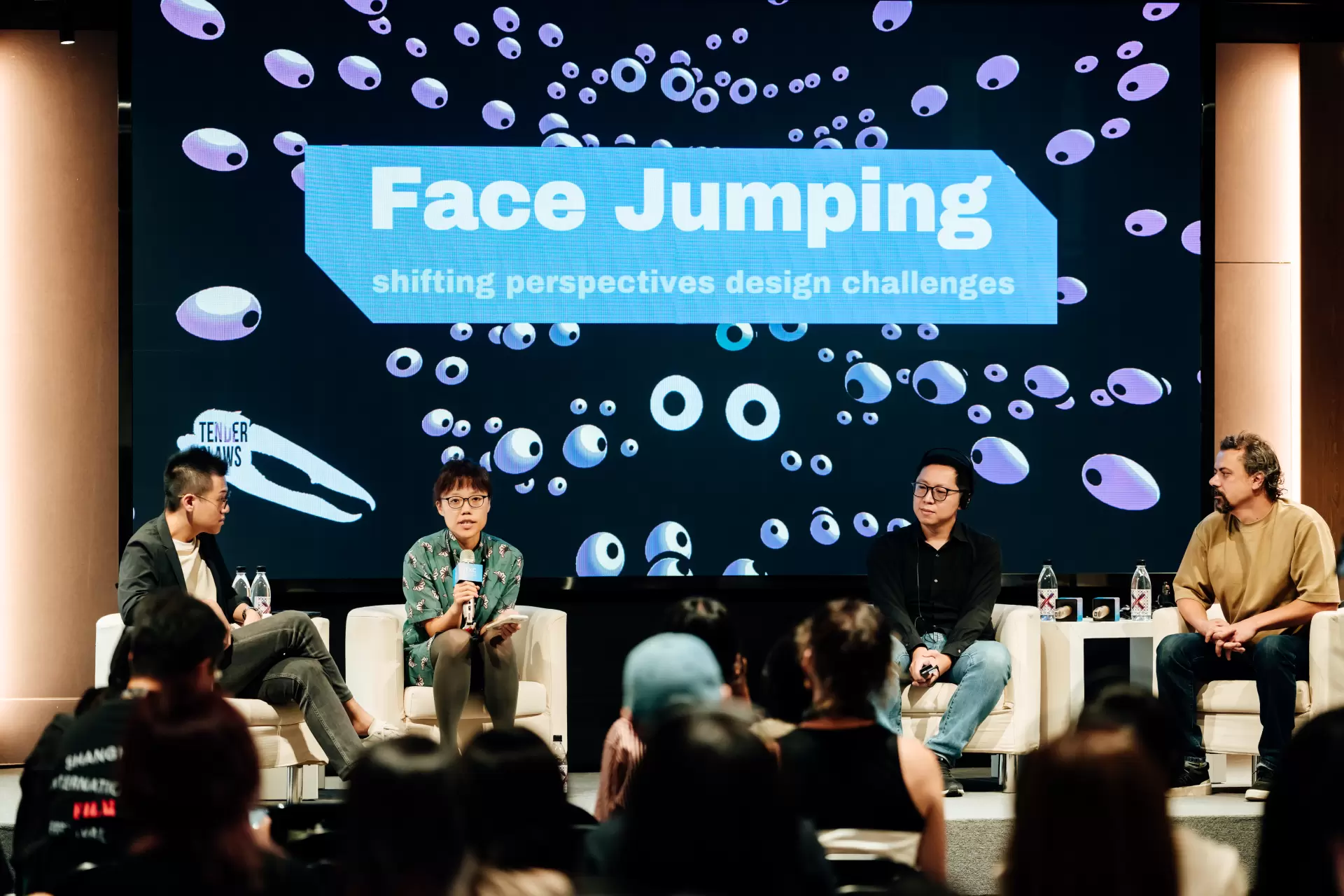
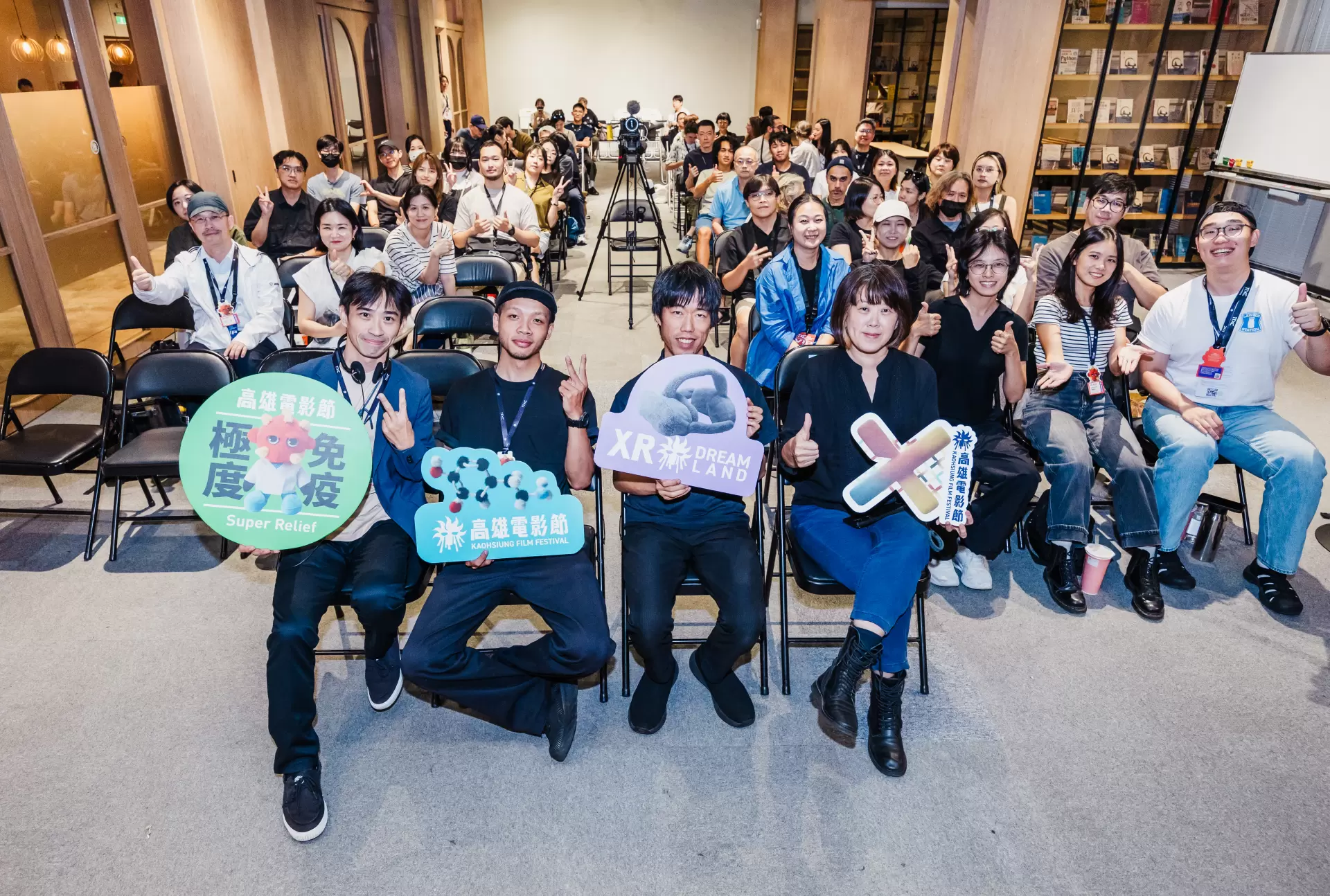
The Clouds Are Two Thousand Meters Up was featured in the Oct. 25 Kaohsiung VR Film Lab Originals showcase event, moderated by XR DREAMLAND curator WANG. He began by congratulating the creators for winning the 2025 Kaohsiung Film Festival XR Golden Fireball Award the previous day, then invited them to share the monumental task of adapting a literary novel into a virtual reality experience.
Director CHEN, joined by VR Supervisor CHUAN and Lead Programmer and Visual Supervisor HUANG, elaborated on the two-year “level-skipping” endeavor to methodically deconstruct the intricate narrative framework of author Wu Ming-Yi’s novel. Through the perspective of the story’s protagonist, “Guan,” the work traces the creative output and field research trails of his late wife. By progressively layering spatial environments, the experience guides participants into the mountainous habitats of Taiwan’s “sacred beast”—the Formosan clouded leopard—and into the science-fiction-infused “clouded chasm.” Leveraging advanced photogrammetry, 4DViews scanning and rendering pipelines, and the latest Neural Radiance Fields (NeRF) technology, the technical team achieved near-photorealistic visuals that elevated the roomscale VR experience The Clouds Are Two Thousand Meters Up to a cinematic level of storytelling, technical execution, and immersive engagement.
The genesis of the VR film The Clouds Are Two Thousand Meters Up traces back to executives at Taiwan Public Television Service Foundation who, after viewing CHEN’s 2022 VR work The Man Who Couldn’t Leave, concluded that virtual reality was an ideal medium for adapting the novel by acclaimed Taiwanese author Wu Ming-Yi. On this basis, they invited CHEN to helm The Clouds Are Two Thousand Meters Up. As a devoted reader of Wu’s oeuvre, she gladly embraced the highly demanding project. Prior to detailing the creative process, CHEN screened a brief behind-the-scenes segment :
“CHUAN explained that the team initially sought to build the production around its forte in live-action capture. However, given the work’s format and specifications, source materials ultimately spanned three primary categories: modeling for entirely fabricated settings such as the ‘clouded chasm’; physical sets—such as the late wife’s living quarters, which were constructed on location and then scanned—to impart tangible spatial authenticity to the experiencer; and the deployment of Gaussian Splatting technology, whose fundamental aim is hyper-realistic reconstruction of real-world scenery, while allowing technicians to introduce deformation and transformation effects. ‘Only by disrupting certain intermediate computations can new elements emerge; subsequent visual-effects treatment then seems to resonate with intense emotional undercurrents, aligning seamlessly with the film’s intended message,’ remarked HUANG.”
CHEN noted that The Clouds Are Two Thousand Meters Up—a roomscale and interactive VR project—relied on funding from the Kaohsiung Film Archive, Takao VC Co., Ltd., and German grants to come to fruition. She acknowledged that the greatest adaptation challenge lay in the intricate structure of Wu Ming-Yi’s novel: its first-person immersion in protagonist Guan’s inner world and memories of his late wife, whose sudden death propels his journey. Though silent in the narrative, the wife exerts pivotal influence through her unfinished manuscript, depictions of the “clouded chasm”, and the realm’s enigmatic digital traces. Within her text, an indigenous figure named A-Bao and his mountain-dwelling grandmother dominate roughly two-thirds of the story. The final section shifts to Wu’s authorial perspective, objectively detailing contextual elements such as Rukai tribal mythology, clouded leopard legends, and Taiwanese ecological knowledge. The original work's content is characterized by non-linear time shifts and intertwining, complex narratives. While it is highly suitable for a VR adaptation, it also represents the longest and most complex VR piece that CHEN has created to date.
Midway through the launch event, VR Supervisor CHUAN shared insights on experimenting with the emerging Gaussian Splatting technology: “It’s still maturing, so we didn’t dive in right away, but it allows for seamless blending and layering effects. For the protagonist, we stuck with 4DViews scanning. What sets it apart is our precise lighting setup to create a stronger sense of depth.”
Lead Programmer and Visual Supervisor HUANG then explained the software workflow: “This roomscale VR setup uses a 6×7-meter space, but 4DViews only captures within a 3×3-meter range. To cover larger areas, we combined VR tracking with physical props to simulate the full environment and help actors stay oriented during filming. Gaussian Splatting was used to achieve hyper-realistic reconstructions of scanned subjects. We also applied Unity tools to deform, trim, and reposition those assets — all to make the VR world feel as close to reality as possible.”
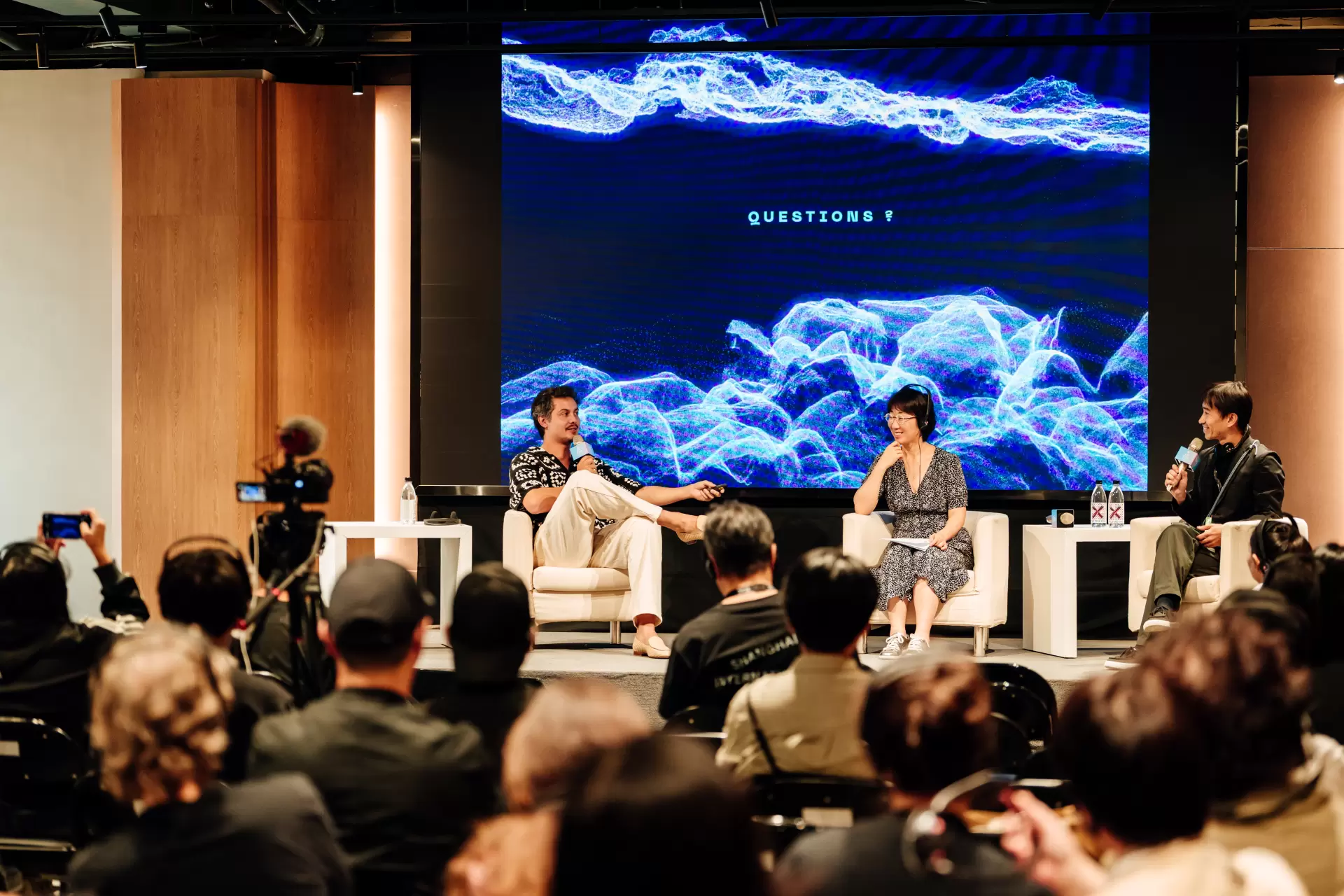
At the end of the event, an audience member asked the director: “Have you ever considered making The Clouds Are Two Thousand Meters Up a multi-user (maybe 2–3 people) roomscale VR experience?” CHEN replied, “We never considered multi-user from the start. Even though multi-user VR can be more profitable in commercial settings, this is a deeply personal story about inner exploration. That’s why we’re sticking with single-user for the first festival run, staying true to the original vision. If there’s room to adapt later, we might explore logical ways to add multi-user movement. Until then, The Clouds Are Two Thousand Meters Up remains a solo VR journey of discovery.”