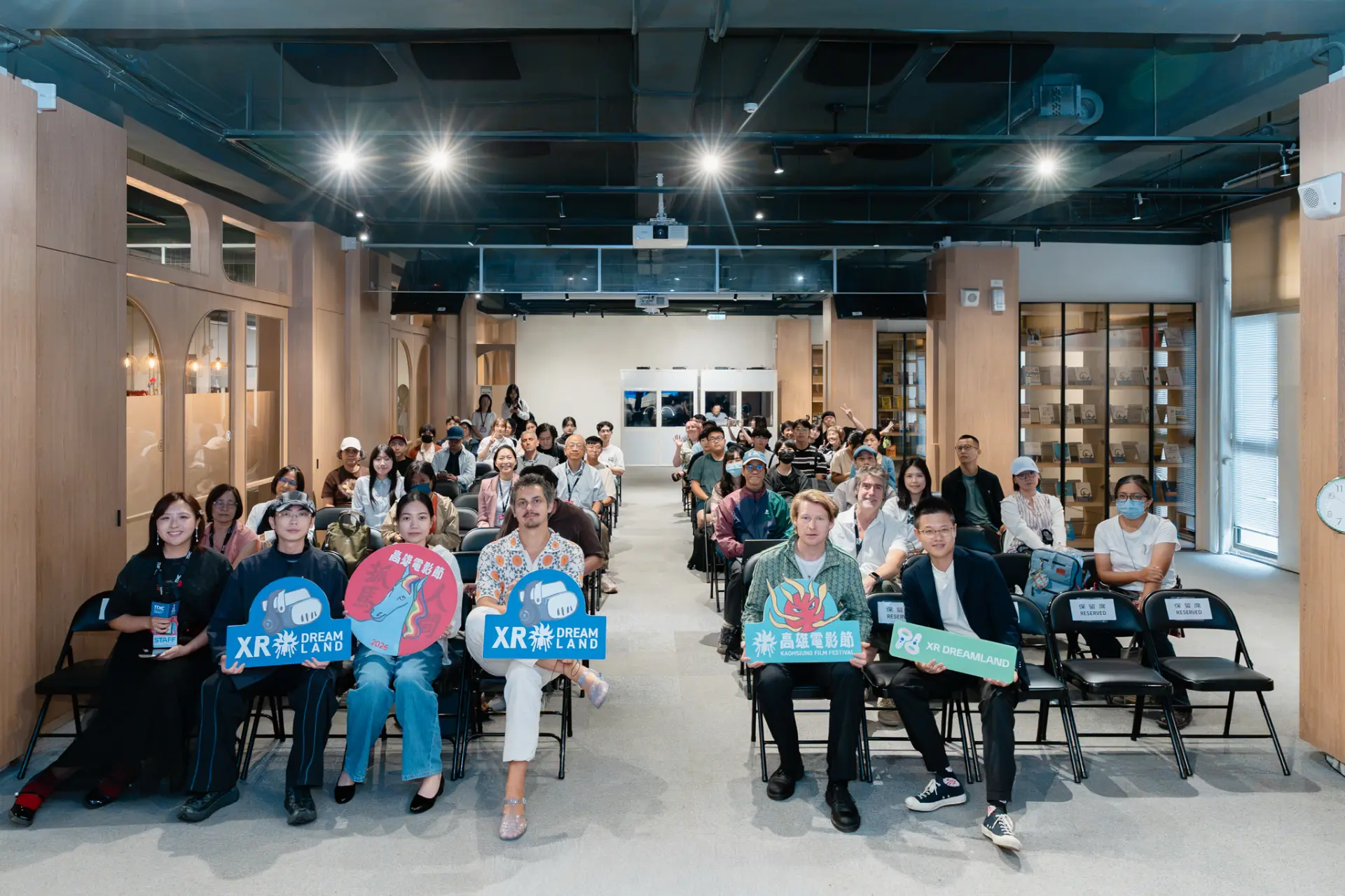
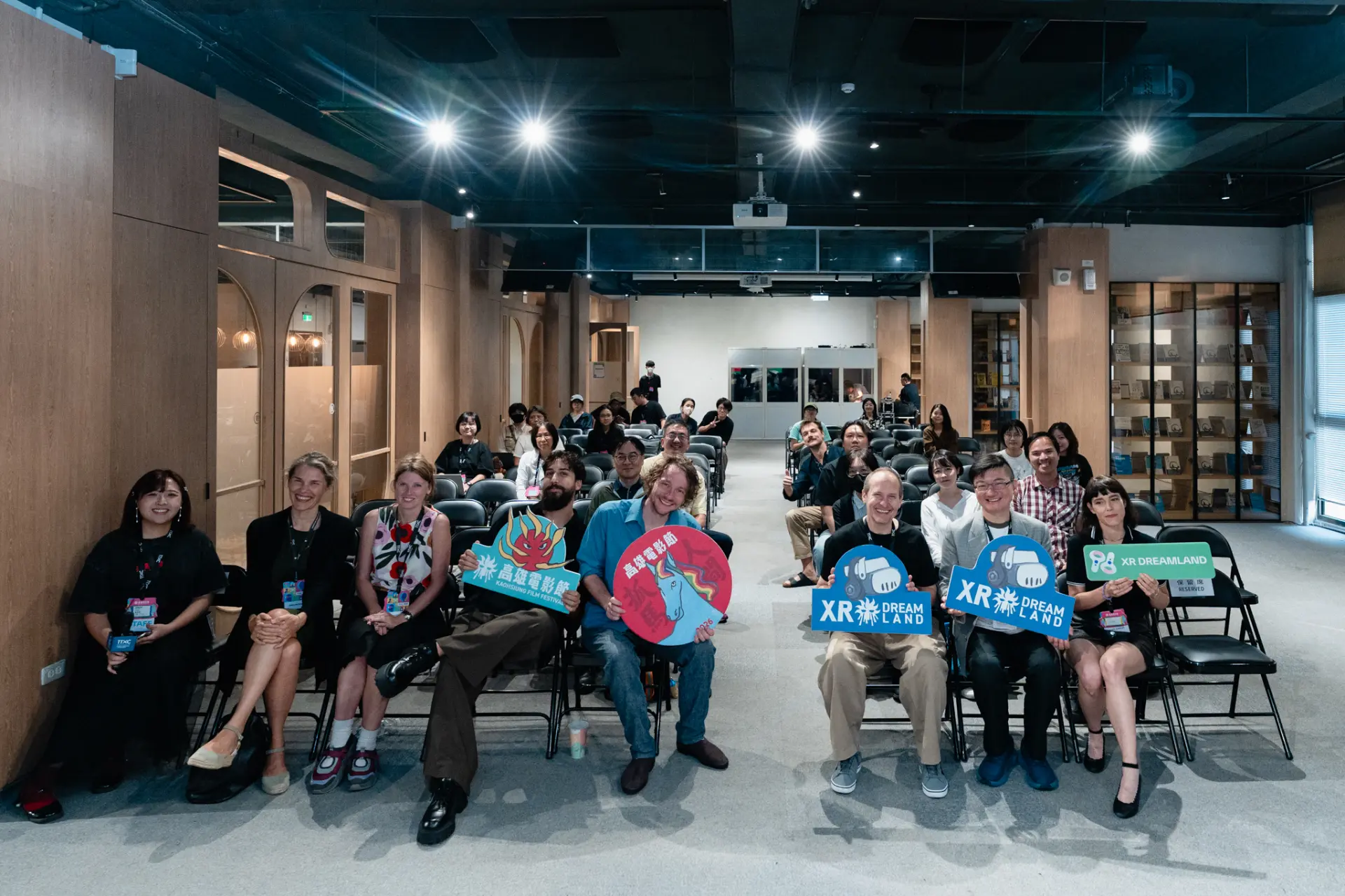
【 XR INDUSTRY EVENT 】Japan's XR Frontline
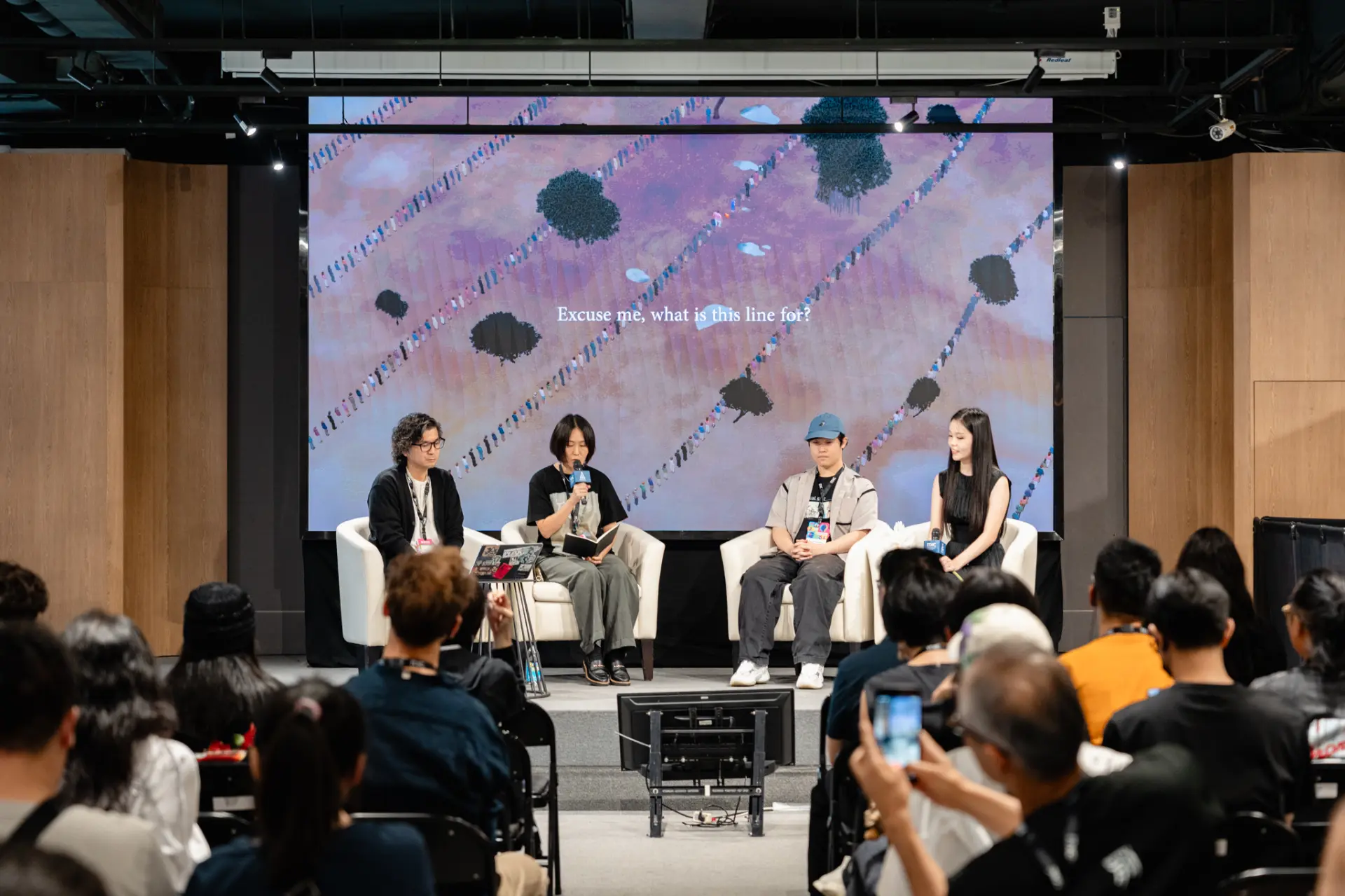
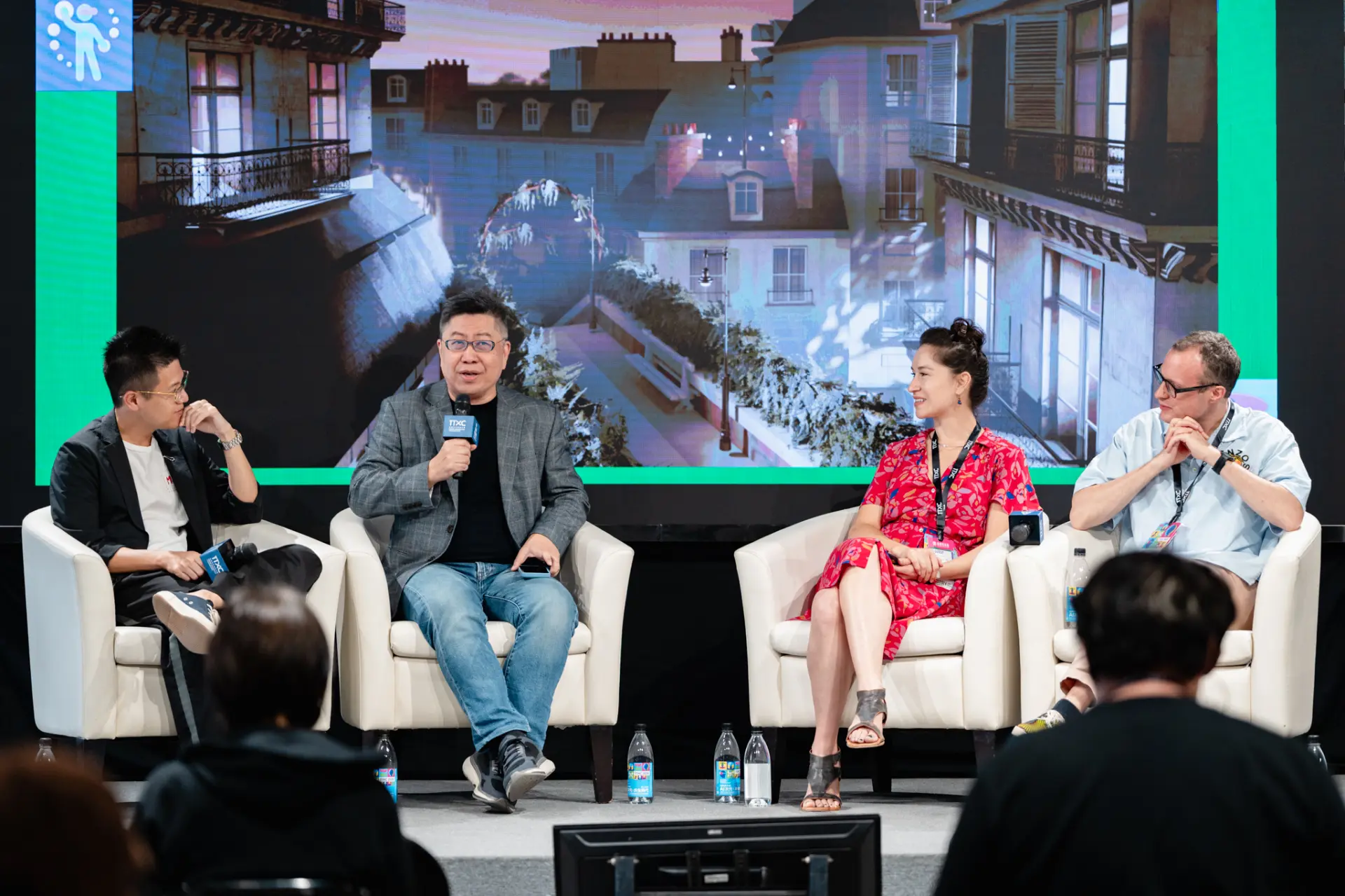
.Panelists
- Director of RETSU (The Line)|KAMIMURA Naho
- Director of First Virtual Suit|YUHARA Kazuki
- Director of Nox|NAKADA Rio
.Moderator
CinemaLeap Executive Producer, Immersive Journey Contents Producer & Director, Beyond the Frame Festival Director|MACHIBA Katsutoshi
____________________________________________________________________
YUHARA Kazuki
Over the past three years, Japan's VRChat user base has roughly doubled, while sales of related 3D assets on the BOOTH platform have grown threefold. The industry is at a stage where individual creators collaborate with corporations, propelling creator visibility onto a global scale. First Virtual Suit weaves together the deeply influential avatar culture and VRChat community. Inspired by mixed reality (MR) works, the project bridges experiences between physical and virtual worlds, exploring identity and the connection between "oneself wearing the headset" and "one's avatar in VRChat."
With funding from Japan’s Ministry of Economy, Trade and Industry (METI) through its "SOFU" initiative, the project secured financial support for international promotion, which was primarily allocated toward English and Japanese translation, voice acting, and music production—the piece's most critical element. Moving forward, the key challenge lies in finding cross-disciplinary partners, with international film festivals serving as the essential starting point. Through festival exchanges and observations, creators are inspired to produce continuously while cultivating new audiences, ultimately building a healthy XR ecosystem.
NAKADA Rio
Drawing on her own experience, Nakada translates past trauma, dissociative symptoms, memories, and neurological sensory experiences into visual symbols and physical interactions within VR space. Regarding the disclosure of intimate personal experiences, Nakada felt a sense of urgency during production, believing it was essential to express that inner trauma. Faithfully presenting both the reality she saw and her inner world as experienced proved to be the most natural approach.
After being selected for the Agency for Cultural Affairs' Project to Support Emerging Media Arts Creators and METI's "SOFU" grant, Nakada successfully completed Nox. However, due to a lack of initial capital, the grant funds were almost entirely spent on hardware, leaving Nakada to handle all interactive development independently.
Although Nox was selected for competition at Venice Immersive, Japan currently lacks systematic institutional funding for overseas XR promotion and sustaining XR works after completion. Travel and public relations expenses fell almost entirely on the creator, imposing a severe financial burden that makes launching her next project difficult. Admitting that continuing to create in Japan remains challenging, Nakada hopes to secure support from overseas markets like Taiwan in the future.
KAMIMURA Naho
Primarily a film and television writer-director, Kamimura was invited by producer Kenji Ishimaru and Kodansha VR Lab to join as a screenwriter, marking RETSU (The Line) as her debut VR directorial effort.
Adapted from Fuminori Nakamura's novel, RETSU (The Line) utilizes VR's 360-degree immersive space to let audiences individually experience the physical action of "taking a step forward in a line." By linking immersive presence with introspective emotion, the experience continuously prompts viewers to engage in self-dialogue. The narrative evolves from confronting oneself to posing ultimate questions about human nature.
The original novel was difficult to adapt and had never been brought to the screen in any visual format, making this VR work its sole adaptation. Within VR's 360-degree panoramic environment, traditional shot-by-shot editing is largely absent as a means of driving scene progression. Instead, the piece seamlessly navigates between intense realism and heightened spirituality—a characteristic that aligns exceptionally well with the novel's essence, creating a captivating and unique experience.
Current State of Japanese XR Creation
Although the XR domain remains relatively unfamiliar to the general public, Japanese government agencies and private organizations have gradually begun offering dedicated resources in recent years.
On the public sector side, METI launched the "SOFU" program, while the Agency for Cultural Affairs supports active creators through its Project to Support Emerging Media Arts Creators. While other sporadic support measures exist, government grant applications involve extremely cumbersome procedures and heavy administrative workloads, creating a significant burden for creators.
In the private sector, initiatives such as Sanrio Virtual World Awards and Kodansha's Creators’ Lab provide funding while co-developing projects. On the festival circuit, events like the Beyond the Frame Festival and the XR Awards offer crucial presentation platforms.
In education, the Department of Games and Interactive Arts was established within the Graduate School of Film and New Media at Tokyo University of the Arts—a breakthrough development marking the introduction of an immersive art curriculum at a national university in Japan. Many private universities are also expanding pathways for immersive content studies.
How much of this support actually reaches the creative frontlines?
Addressing public sector application schemes, Yuhara noted that First Virtual Suit could not have been produced without the support of the SOFU program. However, selected slots remain extremely limited. Furthermore, programs like those offered by the Agency for Cultural Affairs only fund exhibition costs rather than production budgets, a mechanism that prevents creators from finishing projects smoothly or creating with financial peace of mind.
Nakada shared that applying for grants for Nox required immense time spent on administrative paperwork and applications, diverting focus away from artistic creation. Overseas festival travel expenses are difficult to secure, and even when granted, the funds are a drop in the bucket, despite the cumbersome application procedures. Constantly applying for funds deprives creators of the leeway needed to produce work.
Regarding RETSU (The Line), a cross-industry collaboration with Kodansha and a VR production team, Kamimura highlighted receiving substantial technical support. Unlike traditional film and drama, VR requires extensive technical assistance in various areas. If future support can be genuinely provided for "pursuing personal expression in VR works," the industry as a whole will certainly develop further.
Sustaining Creative Environments and Avoiding One-Off Projects
Moderator Machiba inquired how Yuhara could maintain a sustainable creative environment—transitioning from the fully self-produced MOWB to the team-based collaboration of First Virtual Suit.
Yuhara emphasized that preventing XR from becoming a "one-off endeavor" requires both financial subsidies and exhibition venues. Because XR has long relied on independent production driven by passion and struggled to make a profit, continuous funding is vital, but having exhibition venues is paramount. Without a stage for works to be seen and discussed, capital will not flow into the ecosystem. Japan currently faces a severe shortage of exhibition channels; expanding these venues is essential to forming a virtuous cycle between capital and platforms and preventing the creative environment from stagnating.
Future Creative Plans
Kamimura felt that creating RETSU (The Line) and attending film festivals opened up new expressive possibilities, sparking ambitious desires to produce more works.
Nakada mentioned that Nox still holds many unrealized ideas regarding narrative concept, interaction, and staging. While inspiration is abundant, establishing an environment where creators "do not have to worry about funding" is essential for new productions, as financial anxiety hinders artistic focus.
Even if production receives funding from the SOFU program, official support must extend to international promotion. Discussion highlighted that XR's developmental dilemma stems from its borderless nature: the art world views it as tech, the tech world views it as art, and the film industry views it as technology rather than cinema. Falling through the cracks between disciplines, the field struggles to secure both funding and attention.
Moderator Machiba concluded by acknowledging that creators’ concerns reflect the current state of XR creation in Japan and that, while Japan's progress may seem slow, support is gradually unfolding and nurturing talented artists. To keep this momentum alive, continuous efforts must be made to sustain the industry's spark