【 XR INDUSTRY EVENT 】The Distinct Aesthetics of Contemporary XR
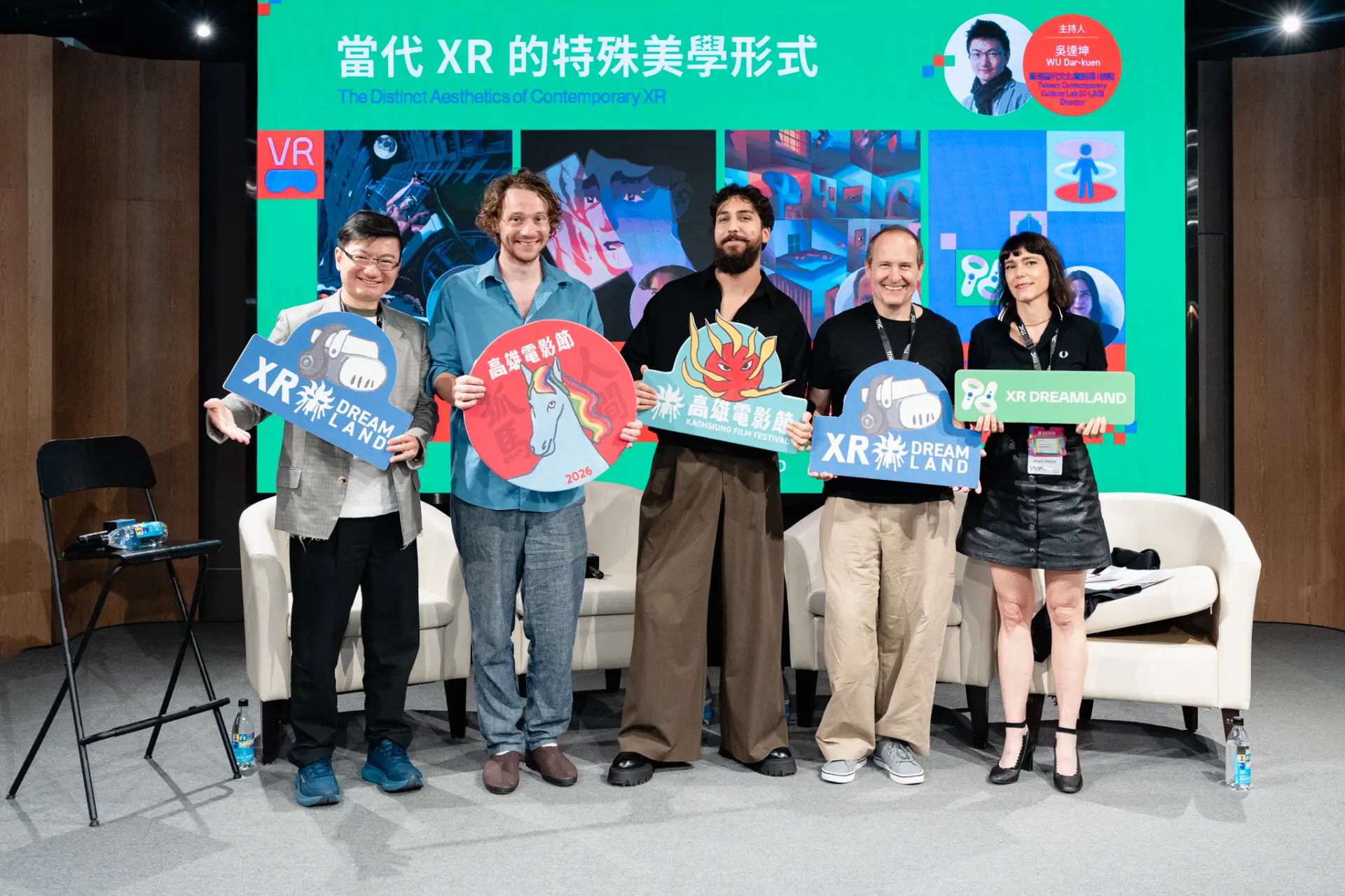
.Panelists
- Director of Honeyboys|Tibor DE JONG
- Director of Lúcido|Vier
- Director of Yesterday Maybe|Matthieu VAN EECKHOUT
- Vice President, Fondation pour la création numérique|Anaïs EMERY
.Moderator
Taiwan Contemporary Culture Lab (C-LAB)/Director|WU Dar-kuen
____________________________________________________________________
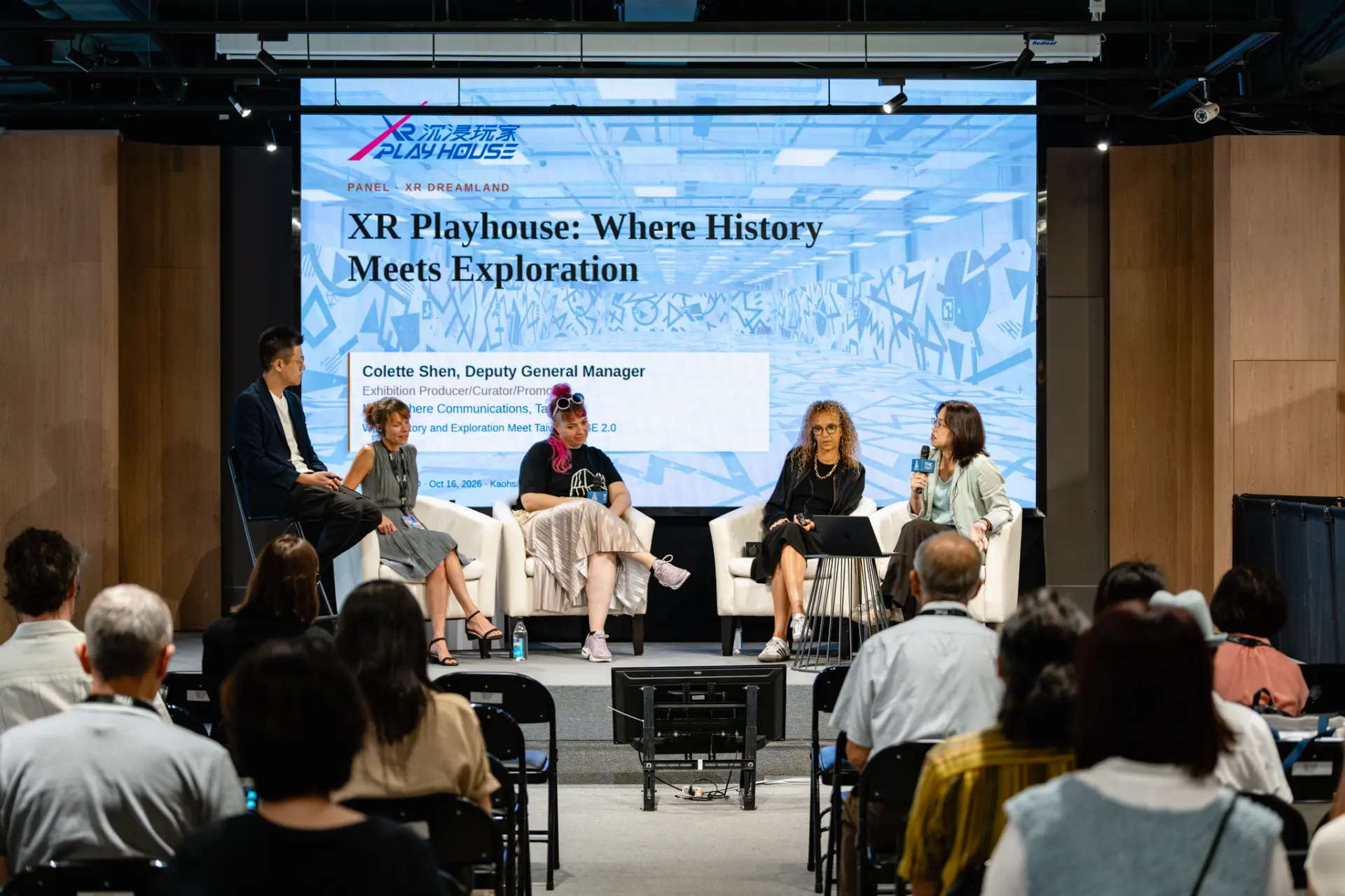
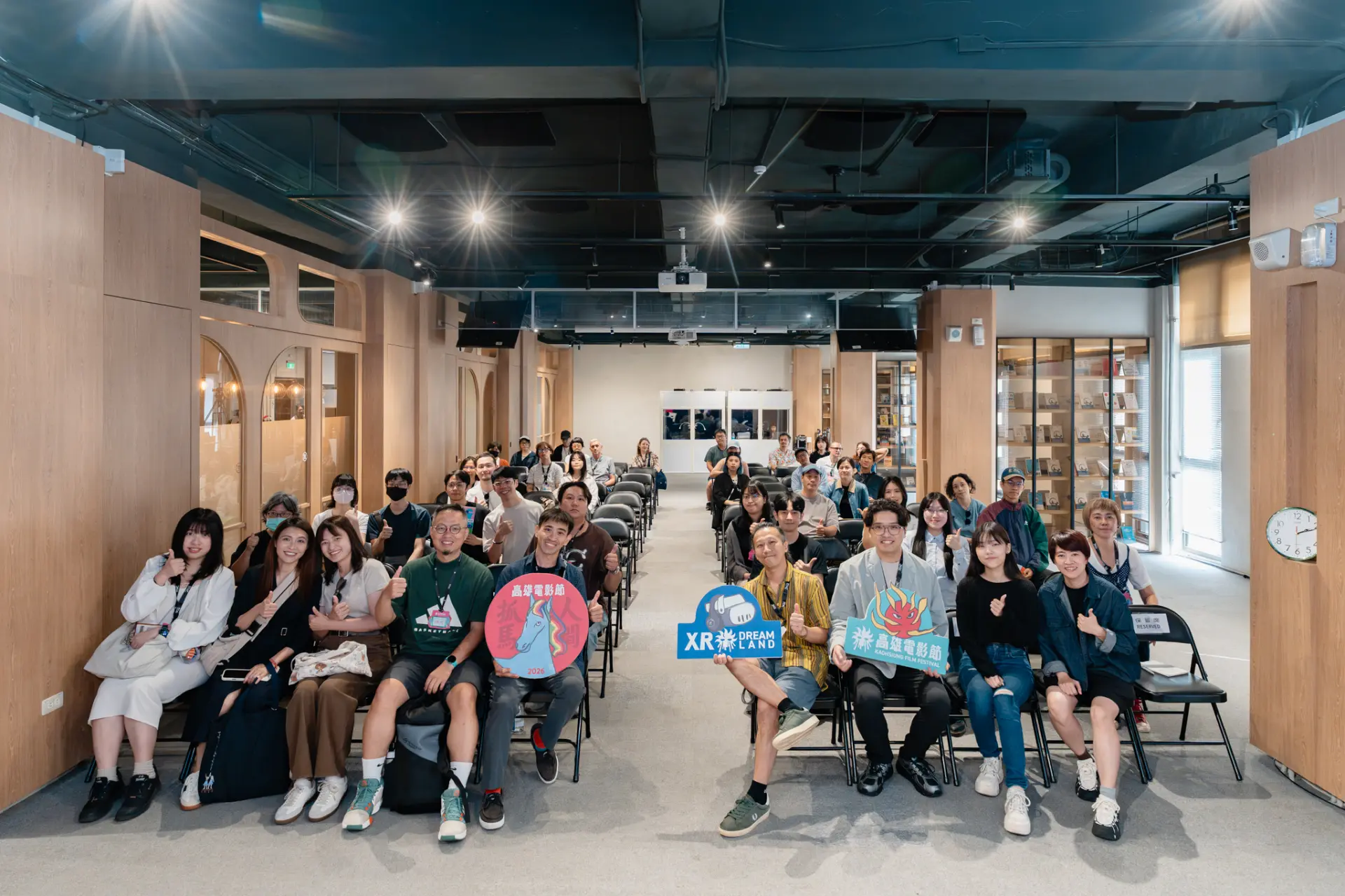
When Virtual Reality breaks the limits of traditional screen-based viewing and allows audiences to step inside the work itself, how does XR develop its own unique artistic language? Moderated by Wu Dar-kuen, Director of Taiwan Contemporary Culture Lab (C-LAB), this panel brought together Tibor de Jong, director of Honeyboys; Vier, director of Lúcido; Matthieu Van Eeckhout, director of Yesterday Maybe; and Anaïs Emery, Vice President of Fondation pour la création numérique. Drawing from three aesthetically distinct works, the panelists shared how XR leverages space, perspective, and sensory experience to open up narrative possibilities beyond traditional cinema and further discussed the distinctive qualities and future development of contemporary XR.
Beyond Flat-Screen Viewing: Stepping into Creators’ Imagined Worlds
Addressing their choice of VR as a creative medium, director De Jong noted that VR offers rich artistic possibilities, allowing audiences to naturally enter worlds created by artists while retaining a playful spirit of exploration. Director Vier shared that compared to media with well-established creative languages, VR remains largely undefined, giving creators the freedom to experiment with visual expressions and narrative forms. Director Van Eeckhout pointed out that spatial and bodily perception mark VR's greatest departure from traditional cinema, enabling audiences to experience the world constructed by the work through shifts in distance within the space.
In the VR360 piece Honeyboys, dreamlike scenes and a striking visual style paint a world that is both alluring and unsettling. Director De Jong noted that while the piece adopts a relatively passive narrative format, he aims for audiences not merely to listen to a story, but to experience its absurdity and tension by stepping inside the protagonist's world. By deliberately using distinct visual symbols and scenarios, the work challenges the audience’s moral boundaries and even evokes unease and discomfort, prompting deeper emotional responses and reflection.
Emery highlighted that one of immersive content's most captivating qualities is its capacity to draw audiences deeper into an artist's creative world, allowing them not only to observe a work’s outward form but also to experience the creator's unique vision of space, atmosphere, and narrative.
From Dreams to Memory: Space as a Vessel for Emotion and Narrative
Lúcido director Vier, who also served as the project's visual designer, shared that they employed techniques like image layering, optical illusions, and spatial transformations to convey shifts between waking reality and dreams. This approach gradually draws audiences into the protagonist's internal world as he tries to control his dreams and escape grief and family relationships.
Vier emphasized that VR's ability to let audiences experience spatial shifts and a sense of losing bodily control was an important reason they chose the medium for this work. Unlike traditional cinema that guides viewing through edits, VR empowers audiences to explore scenes from diverse angles, making visual shifts an expressive tool for conveying a character’s emotions and psychological state rather than just a stylistic choice.
Another VR360 work, Yesterday Maybe, translates the unspeakable grief of losing a loved one into an immersive experience. Director Van Eeckhout shared that facing sudden loss often plunges individuals into confusion and emotional disarray, sometimes leaving them unable to understand their own emotions. The work uses the interplay of space and memory to guide audiences through this intricate emotional journey.
Van Eeckhout stressed that he did not want to impose particular emotions on viewers; instead, he created a space where viewers can project their own experiences, allowing participants to face grief on their own terms. He added that the creative process allowed him to process his own past emotions, turning personal memories into an artwork that doubles as a means of understanding his own experiences.
Beyond Technical Limits: Exploring the Artistic and Industrial Potential of XR
Moving from the discussion of the three works to broader industry developments, Emery observed that immersive art remains in an ongoing state of exploration—evolving from early VR360 films into interactive experiences, alongside recent growth in AR, installation art, and cross-disciplinary collaborations spanning music and museums. She emphasized that the XR ecosystem requires more diverse exhibition spaces and distribution channels so that works in different formats can continue to reach audiences.
With XR’s business models yet to mature, director Vier maintains an open mindset. They believe that even if XR has yet to reach audiences on the scale of traditional cinema, creators should make the most of current technological capabilities and creative freedom to continue exploring the medium’s possibilities. Director Van Eeckhout noted that as the industry matures, producers and creative teams are accumulating cross-disciplinary expertise; however, establishing sustainable business models remains an ongoing industry challenge.
Regarding the interplay between technology and artistry, director De Jong reminded producers that, beyond exploring technological capabilities, finding the right artists and collaborators is even more important. While technology evolves constantly, human collaboration remains an important foundation of creative work. Emery echoed this view, advising creators not to limit themselves to technology but to focus on what they truly want to express.
From sensorially charged fantasy worlds and visual journeys between reality and dreams, to emotional spaces anchored in grief and memory, these three works showcase the varied possibilities XR offers for viewing and storytelling. As creators move beyond simply using technology to recreate images and instead weave space, the body, and emotion into storytelling, XR continues to forge its own artistic language, opening up possibilities for contemporary creation