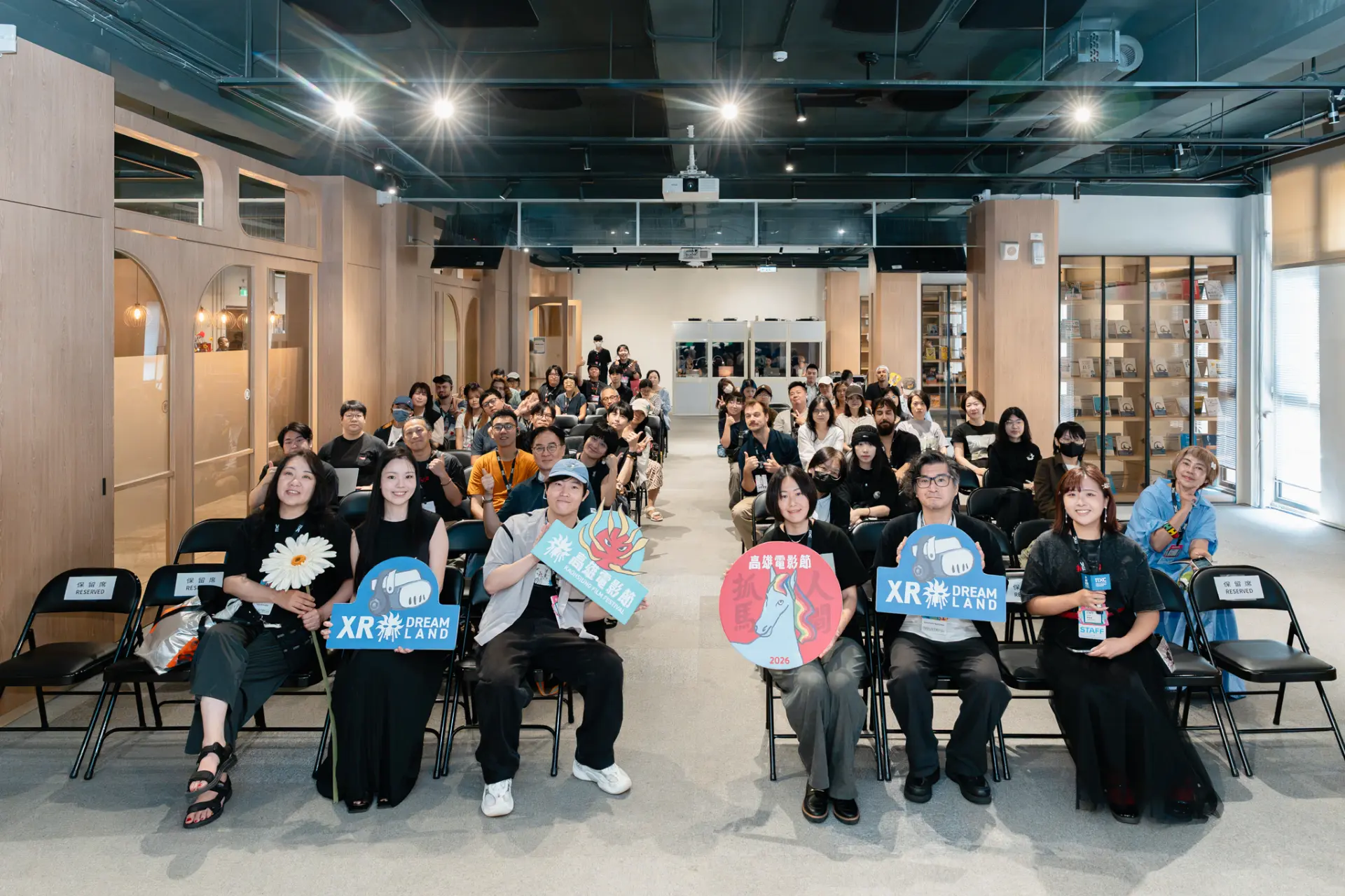
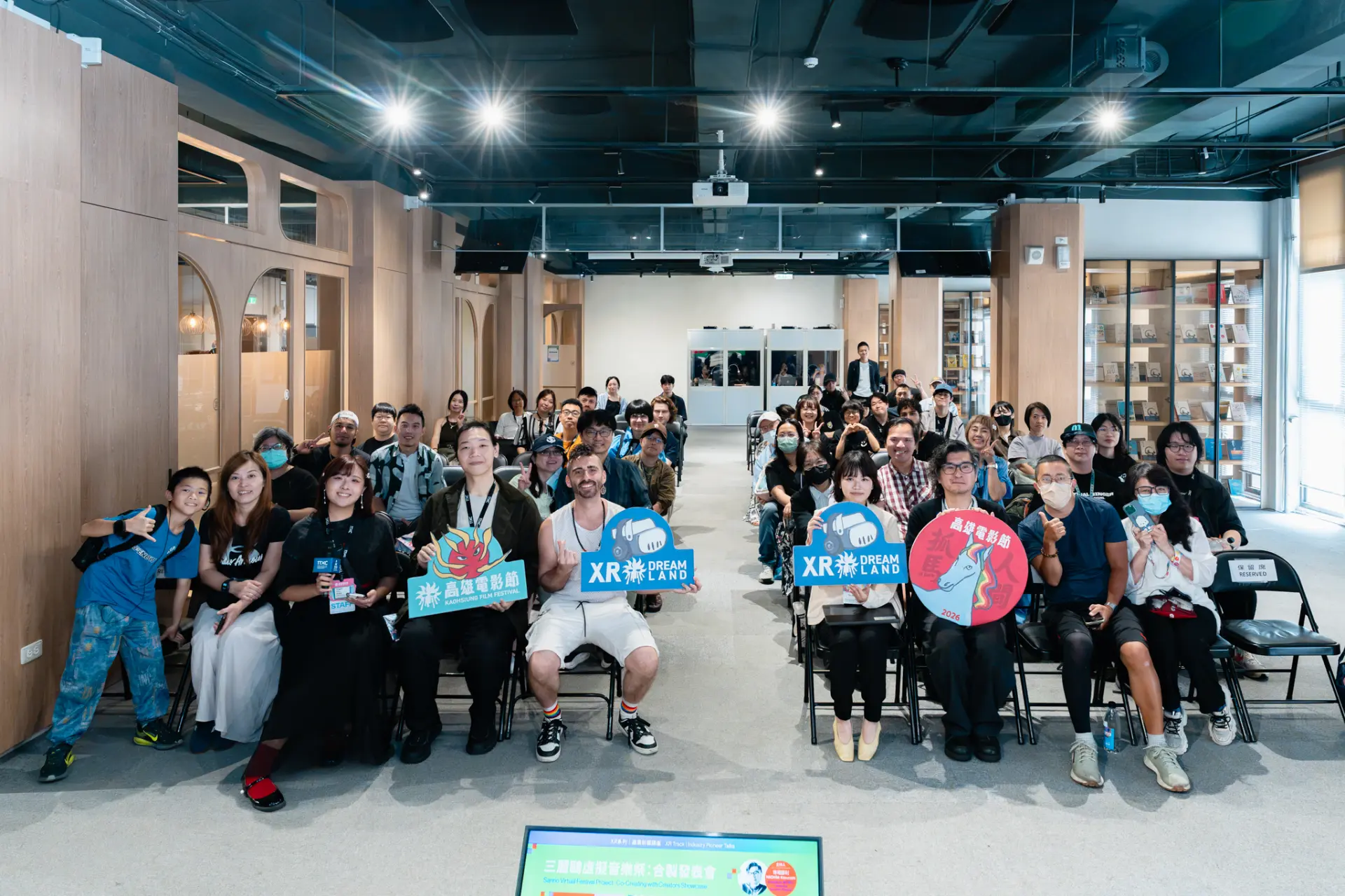
【 XR INDUSTRY EVENT 】Multi-Sensory Experience: Awakening the Senses through Light, Shadow and Movement
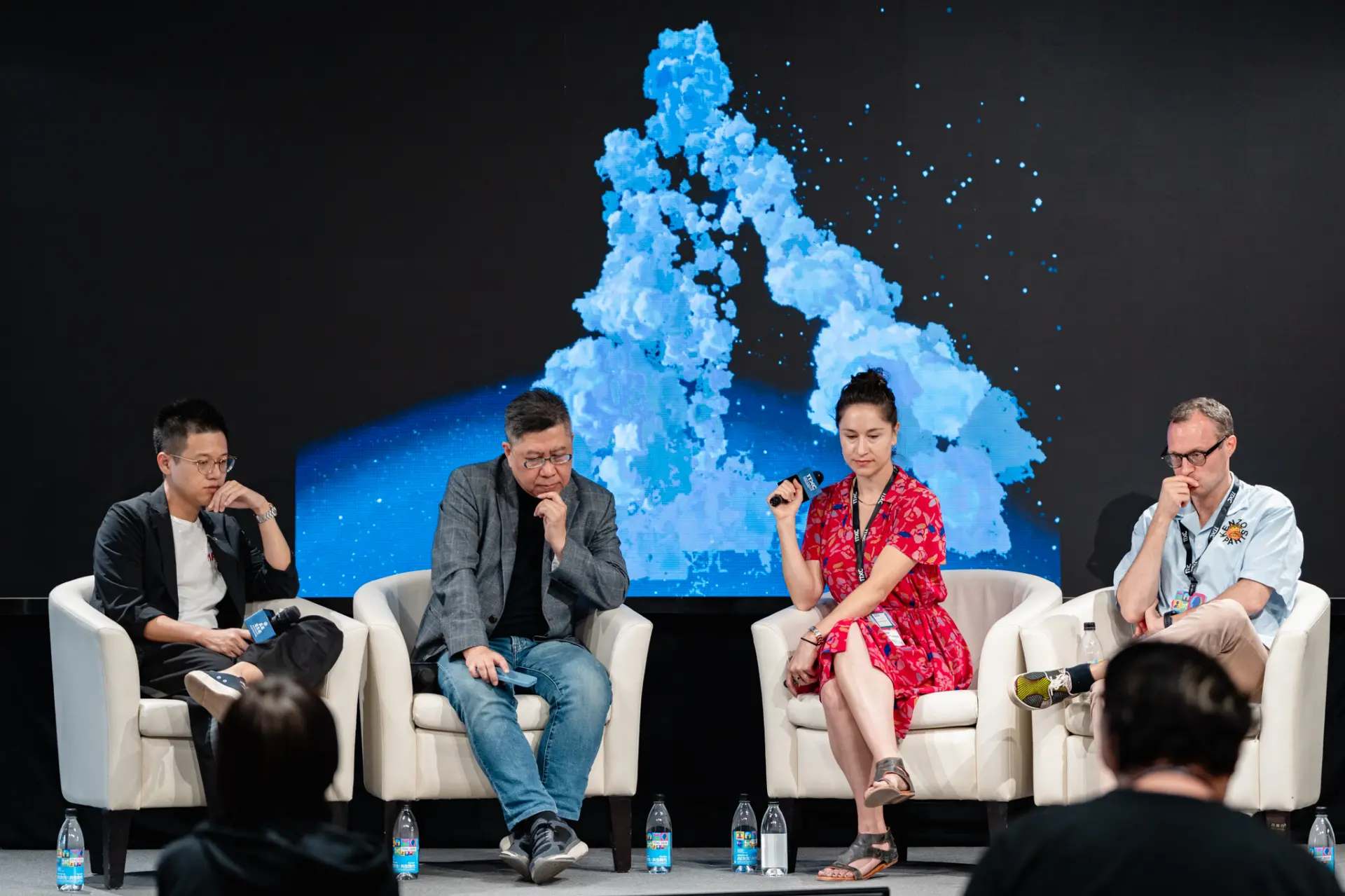
.Panelists
- Co-Producer of The Double, Producer of Flash Forward Entertainment|Patrick Mao HUANG
- Director of Collective Body|Sarah SILVERBLATT-BUSER
- Co-Producer of Empathy Creatures|François KLEIN
.Moderator
DN Pictures, Director of Content|Jimmy CHENG
___________________________________________________________________
When virtual reality moves beyond visual and auditory immersion and invites audiences to explore, feel, and interact through their bodies, how can XR works unlock entirely new sensory experiences? This panel brought together Patrick Mao Huang, co-producer of The Double; Sarah Silverblatt-Buser, director of Collective Body; and François Klein , co-producer of Empathy Creatures. Drawing from three distinct artistic works, the panelists shared how dance, physical movement, and emotional interaction can rebuild connections with oneself, others, and virtual worlds, while exploring the future potential of XR creation and market development.
Reclaiming Sensory and Emotional Connections Through the Body
As a dancer, choreographer, and educator, Collective Body director Silverblatt-Buser shared that the project originated during the pandemic when live touring came to a complete halt and activities shifted online, prompting her to rethink the relationship between the physical body and virtual space. Believing that humans are defined not just by intellect but by physical perception and empathy, Silverblatt-Buser sought to use XR to help participants rediscover their bodies and embrace the innate joy of uninhibited movement.
In Collective Body, participants gradually find their personal rhythm through observation, imitation, and movement. Silverblatt-Buser noted that while many initially feel self-conscious about dancing, wearing a VR headset keeps them from seeing others’ reactions, allowing participants to relax and dance freely—some even being moved to tears during the experience. For her, this XR work is more than an interactive piece; it serves as a meaningful opportunity to reconnect with oneself amidst the hustle of daily life.
Empathy Creatures approaches interaction through caregiving and emotional resonance. Co-producer François shared that director Mélodie Mousset drew inspiration from her journey into motherhood, reflecting on how caring for a child reshapes how we nurture others and ourselves. In the experience, participants use intuitive physical gestures to care for a virtual bird, whose mood and color shift dynamically in response, prompting participants to become more aware of their own emotional states.
Klein added that during development, team members formed genuine attachments to the virtual bird through frequent interaction, even wanting photos of the bird. This revealed that through simple, intuitive gestures, people can build meaningful connections with virtual characters while finding relaxation and emotional healing.
Transforming Movement into Narrative: Unleashing the Audience's Imagination
Discussing the creation of The Double, Huang shared that the project evolved from choreographer-director Blanca Li's Mixed Reality (MR) work The Shadow. Rather than a direct transfer, the VR version involved developing different forms of interaction and narrative experiences.
In a video message, Li described The Double as a game-like journey combining dance, music, and storytelling across ten poetic, fantastical scenes. Huang noted that while people are used to experiencing stories on flat screens, immersive experiences allow audiences to explore freely with their bodies and senses. As they move, they can sense changes in space, gravity, and perspective, unlocking their imagination.
Regarding visual design, moderator Jimmy Cheng inquired why Collective Body favored a relatively simple visual language over elaborate effects. Silverblatt-Buser explained that simple guidance allows participants to freely explore their bodies without being restricted by specific movements or visual forms. She emphasized that artists must tailor their design choices to the experience environment, avoiding distractions so participants can focus on how they feel.
From Creative Support to Market Development: Exploring XR's Broader Potential
Beyond creative philosophy, the discussion explored the pivotal role of co-producers. Huang pointed out that collaborating with artists requires understanding their core vision and experimenting with different technologies and formats to realize that vision. Even under tight budget and timeline constraints, producers must maintain open dialogue to find solutions while honoring the director's final decisions.
Klein noted that, in addition to supporting artists’ visions, producers must help clarify the central message of a work, striking a balance between technical feasibility and creative needs.
Looking ahead at XR's commercial potential, Silverblatt-Buser expressed hopes for larger group dance experiences, observing that traditional theaters are beginning to experiment with emerging technologies to attract audiences across generations. Klein noted that XR need not be the sole medium for performing arts, but can instead integrate with existing theater, music, and IP content to create more diverse presentation formats. Huang highlighted the strong commercial prospects of Location-Based Entertainment (LBE), emphasizing that even as technology advances, genuine human interaction remains irreplaceable.
From dance and healing interactions to fantasy storytelling, these three works demonstrate XR's multi-sensory possibilities. When audiences step beyond passive viewing to explore with their bodies and form emotional bonds with virtual characters, immersive experiences can go beyond technology itself, becoming a way for audiences to rediscover themselves, connect with others, and experience the world