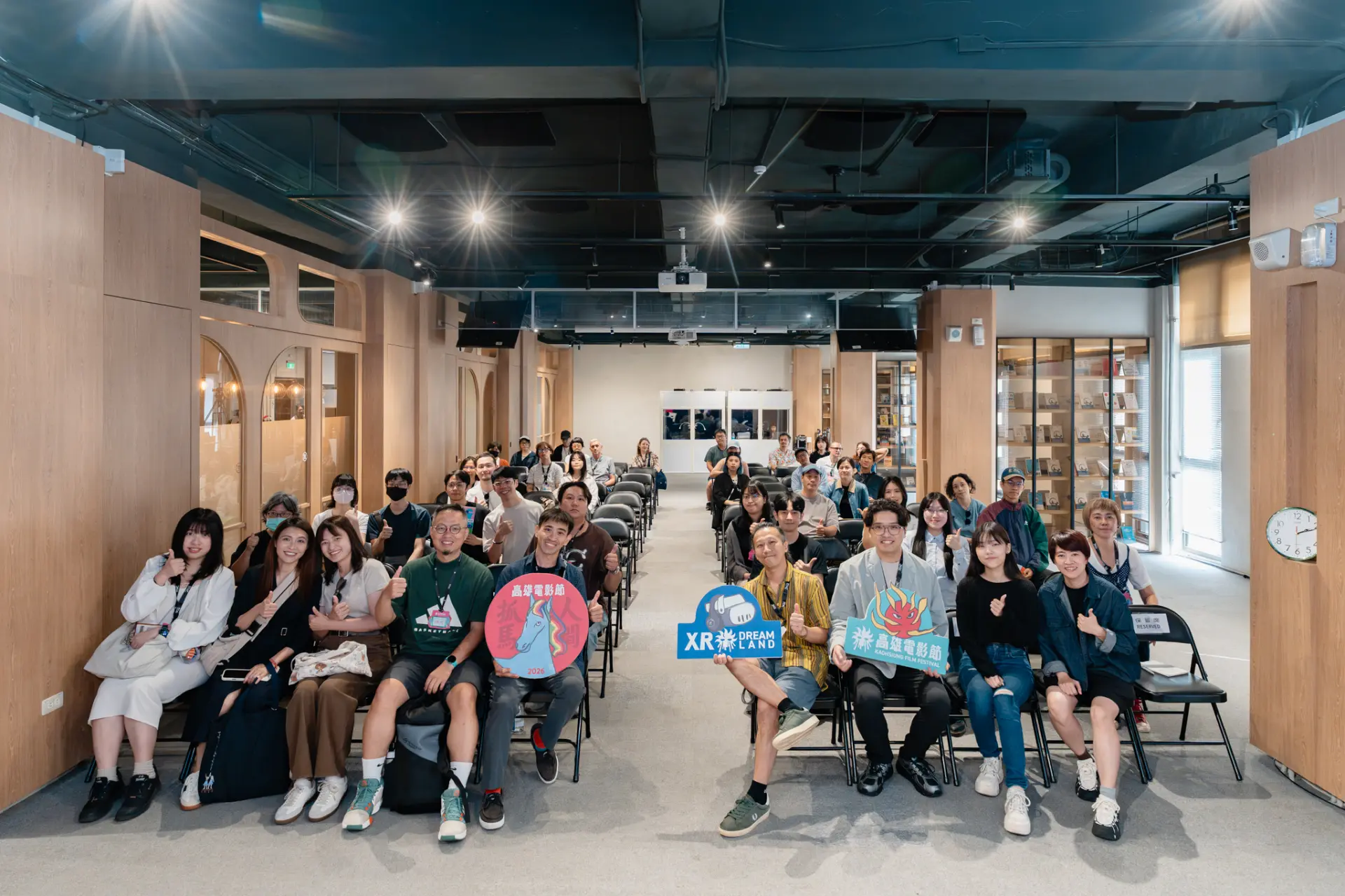
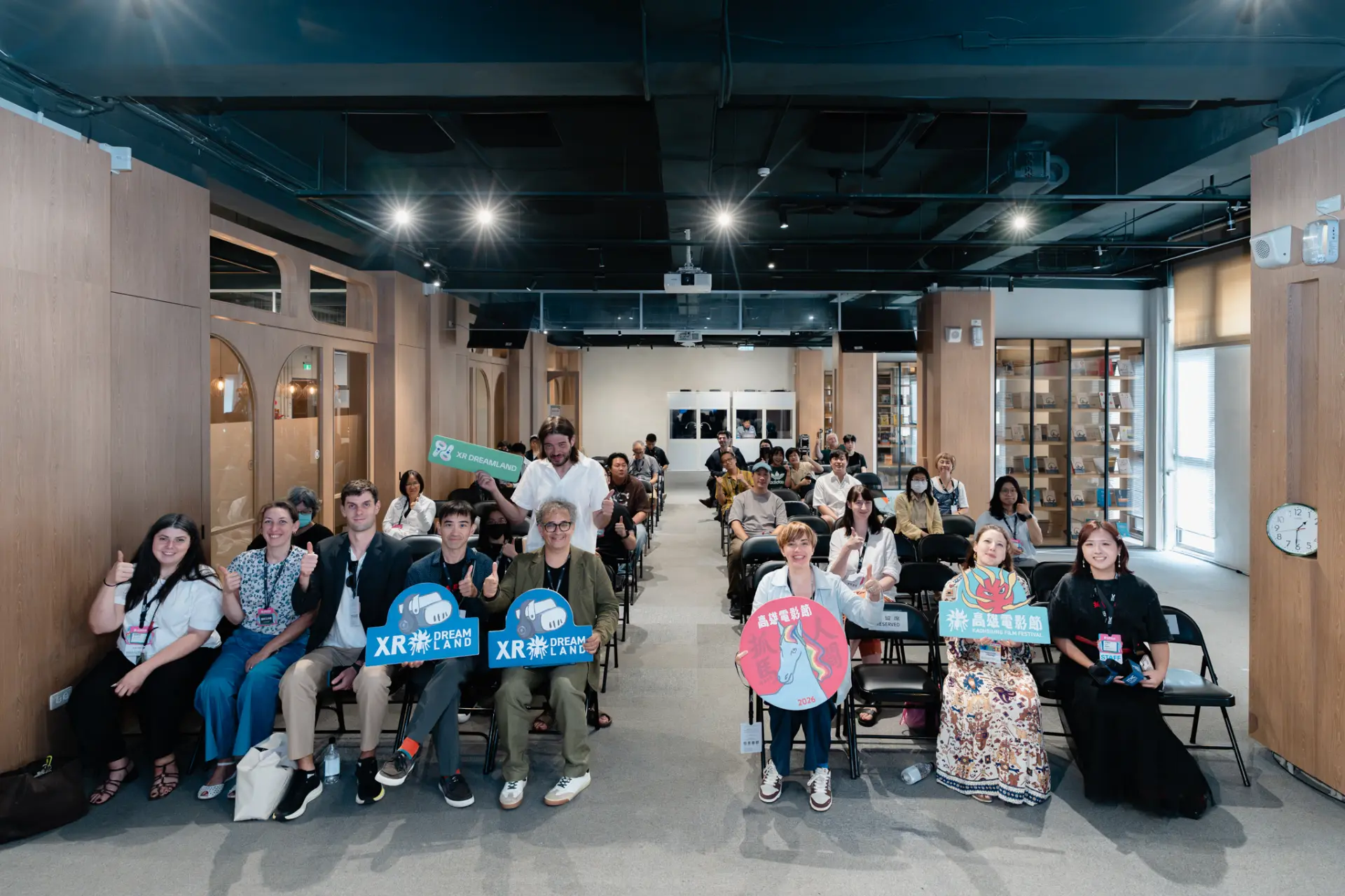
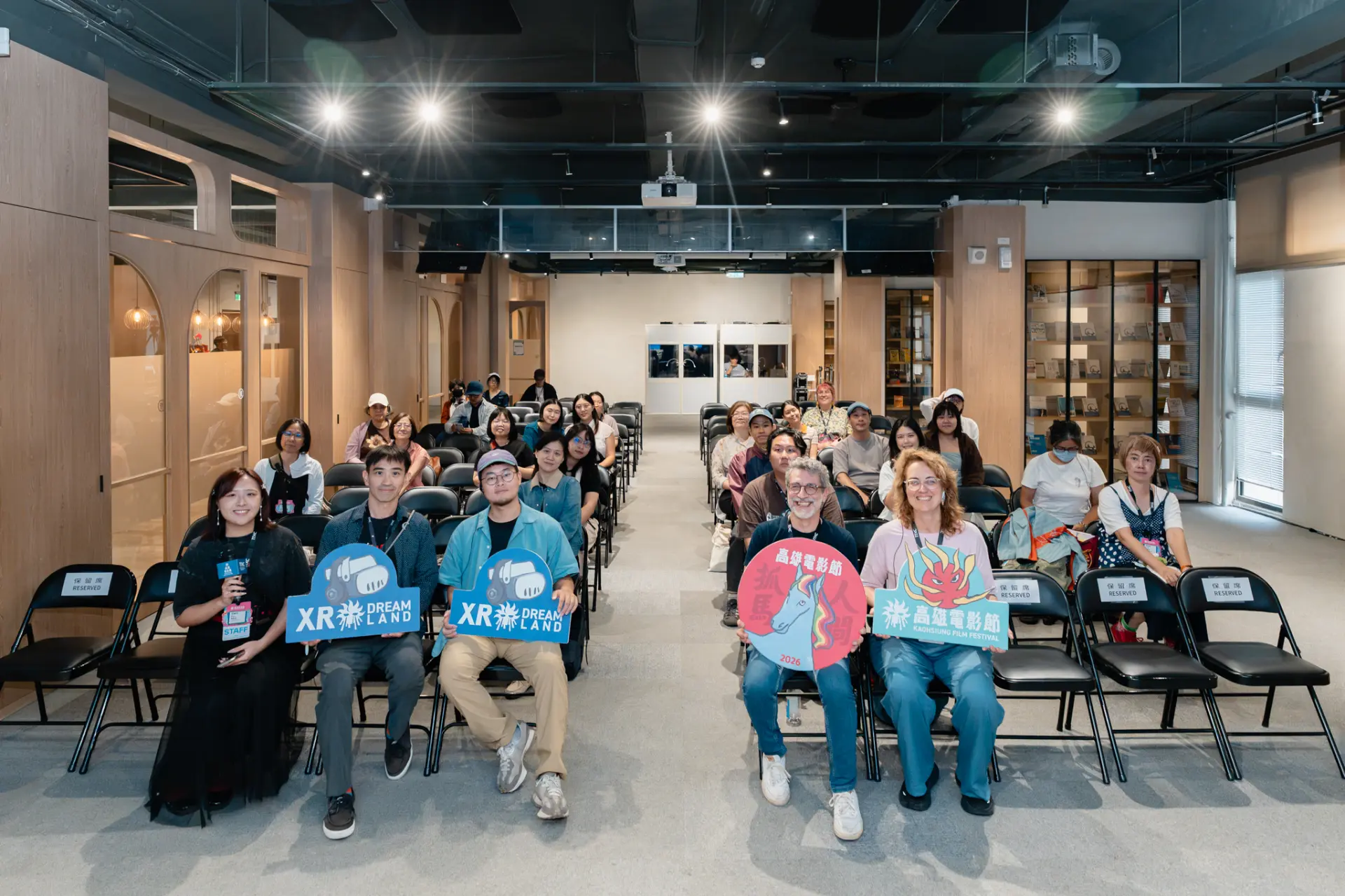
【 XR INDUSTRY EVENT 】Maze of Empathy: When VR Steps into the Inner Landscapes of Human Emotion
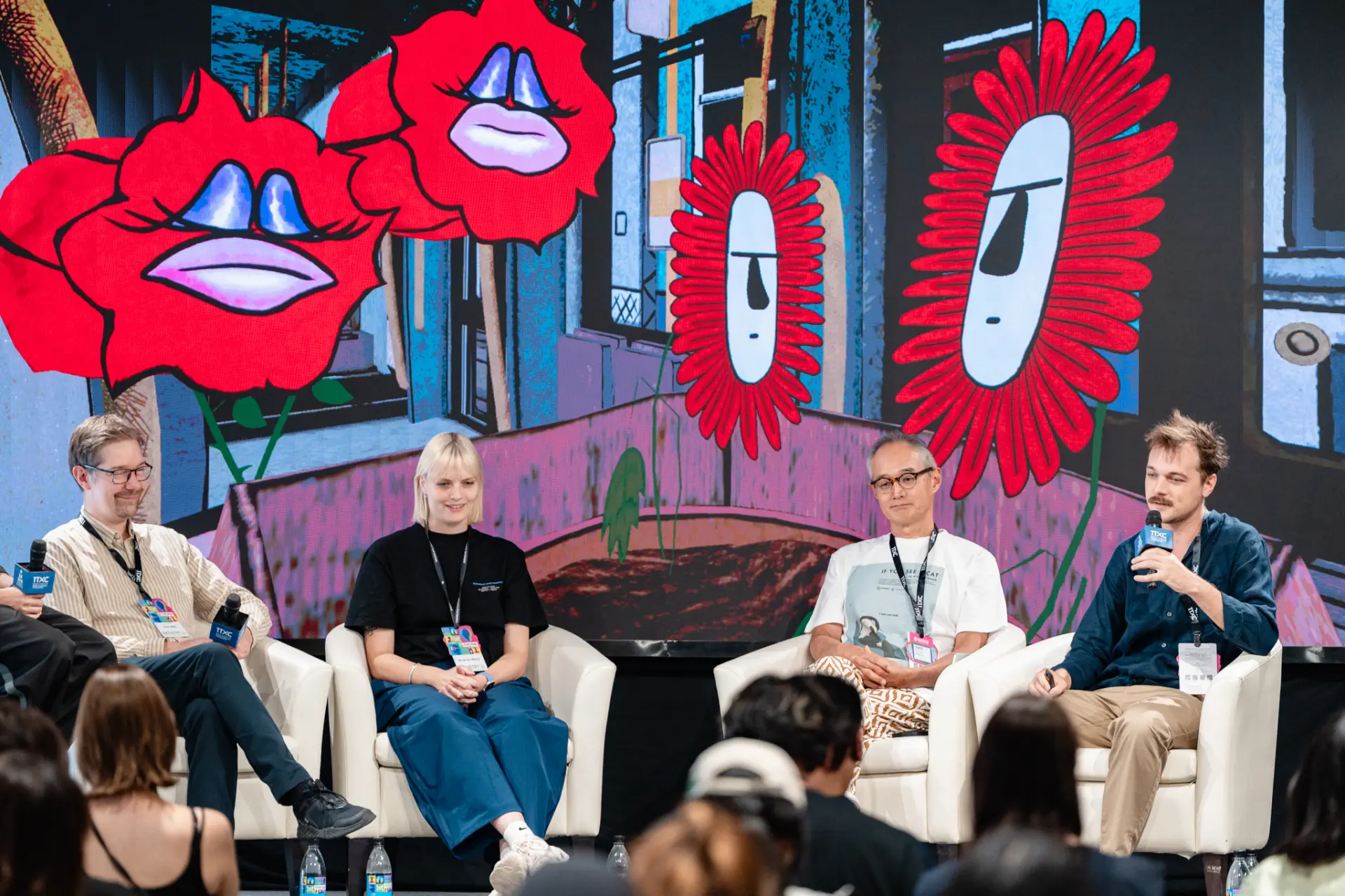
.Panelists
- Director of A Long Goodbye|Victor MAES
- Director of Lesbian Simulator|Iris VAN DER MEULE
- Producer of IF YOU SEE A CAT|ISHIMARU Kenji
- Director of The Great Escape|Joren VANDENBROUCKE
.Moderator
DN Pictures, Director of Content|Jimmy CHENG
____________________________________________________________________
This panel invited Victor Maes, director of A Long Goodbye; Iris van der Meule, director of Lesbian Simulator; Ishimaru Kenji, producer of IF YOU SEE A CAT; and Joren Vandenbroucke, director of The Great Escape, to share how they drew from personal life experiences to build virtual worlds that evoke empathy and deep emotional resonance in audiences.
Project Introductions
The four creators took turns introducing their respective works. Director Van der Meule presented Lesbian Simulator, aiming to translate her lived experience as a queer individual into a colorful style and lighthearted gameplay format that welcomes audiences into the lesbian world. Director Vandenbroucke introduced The Great Escape, allowing audiences to participate in a grand breakout planned by two potted geraniums with wildly contrasting personalities. Producer Ishimaru discussed IF YOU SEE A CAT, noting how many people in modern society suffer from mental illness; the project offers audiences a sense of what patients physically experience during an episode while revealing the rarely seen realities of psychiatric wards. Finally, director Maes explained that A Long Goodbye is a story about dementia and love that takes audiences on a journey of rediscovering memory and self-identity, with the hope of broadening their perspectives on dementia.
First-Person Perspectives and Visual Aesthetics
The moderator asked the creators about their choice of Virtual Reality (VR) as a medium and their visual design considerations. Van der Meule noted that the immersive nature of VR headsets bridges the gap between audiences and queer culture, helping people understand lesbian realities. Visually, she utilized the rainbow colors representing the LGBTQ+ community alongside hand-drawn characters, using humor to soften the topic.
Producer Ishimaru highlighted VR's ability to reconstruct places that are difficult for the general public to access. In IF YOU SEE A CAT, participants experience the patients' plight and emotions from a first-person perspective. The team collaborated with animation director Atsushi Wada, using looping animation to mirror patients' physical and mental states, employing a cute yet uncanny aesthetic to handle a heavy subject gently.
Director Vandenbroucke took a counterintuitive approach: while others explore the various possibilities of VR, he restricted the audience's vantage point entirely to inside a flowerpot—preventing movement or interaction and forcing them to listen to two geraniums complain all day. For him, while VR headsets provide an isolating personal experience, taking these headsets on tour and sharing the experience also serves as a way to build human connection. Visually, he wrapped the plants' grievances in an absurd yet humorous style.
Maes emphasized that VR's first-person perspective mirrors the psychological state of a dementia patient experiencing memory loss and searching for identity. Unlike traditional media where viewers can look away when heavy scenes appear, VR leaves no room for escape, creating a powerful sense of embodiment. Visually, he arranged interactive objects in a lighthearted poetic way, avoiding a hopeless tone and allowing memories of love to be rediscovered.
Translating Sensory Experience in VR
Reflecting on personal experience, the moderator shared thoughts on each piece. Regarding The Great Escape, he felt the work symbolized the tension between different voices within us, as well as the fear of change. Vandenbroucke noted that complaining while going through daily life reflects modern existence, welcoming diverse audience interpretations. Asked if gamification in Lesbian Simulator diluted its topic's seriousness, Van der Meule remained positive, believing the colorful, playful presentation can actually attract audiences unfamiliar with queer issues.
Turning to A Long Goodbye, the moderator inquired about deeper meanings beyond understanding dementia. Maes explained that lighthearted visuals and humor balance the heavy topic; cassette tapes in the interactive experience serve not only as narrative clues but as "interactive tools" teaching patience when accompanying dementia patients. With IF YOU SEE A CAT, the discussion turned to psychological trauma stemming from systemic issues in Asian society. Ishimaru shared that interviews with doctors revealed mental illness often stems from environmental stress, yet current systems often rely on medication or label patients. Instead, he suggested trying to change the environment or provide patients with social interaction and companionship. Following its completion, the work gained attention from medical professionals, prompting practitioners to re-examine treatment approaches and patient rights.
Production Challenges Faced by Creators
The session concluded with the creators addressing production challenges. Maes shared that for a team making VR for the first time, adapting from 2D filmmaking to VR perspectives and handling technical integration posed significant hurdles. Van der Meule observed wide disparities in audiences’ proficiency in using interactive VR, making it crucial to balance gameplay fun with storytelling. Vandenbroucke highlighted interdisciplinary teamwork, pointing out a shortage of people who can bridge artistic creation and technical work. Ishimaru noted that 20 minutes is the optimal duration for headset experiences, making it challenging to deliver a complete story through concise dialogue within that timeframe