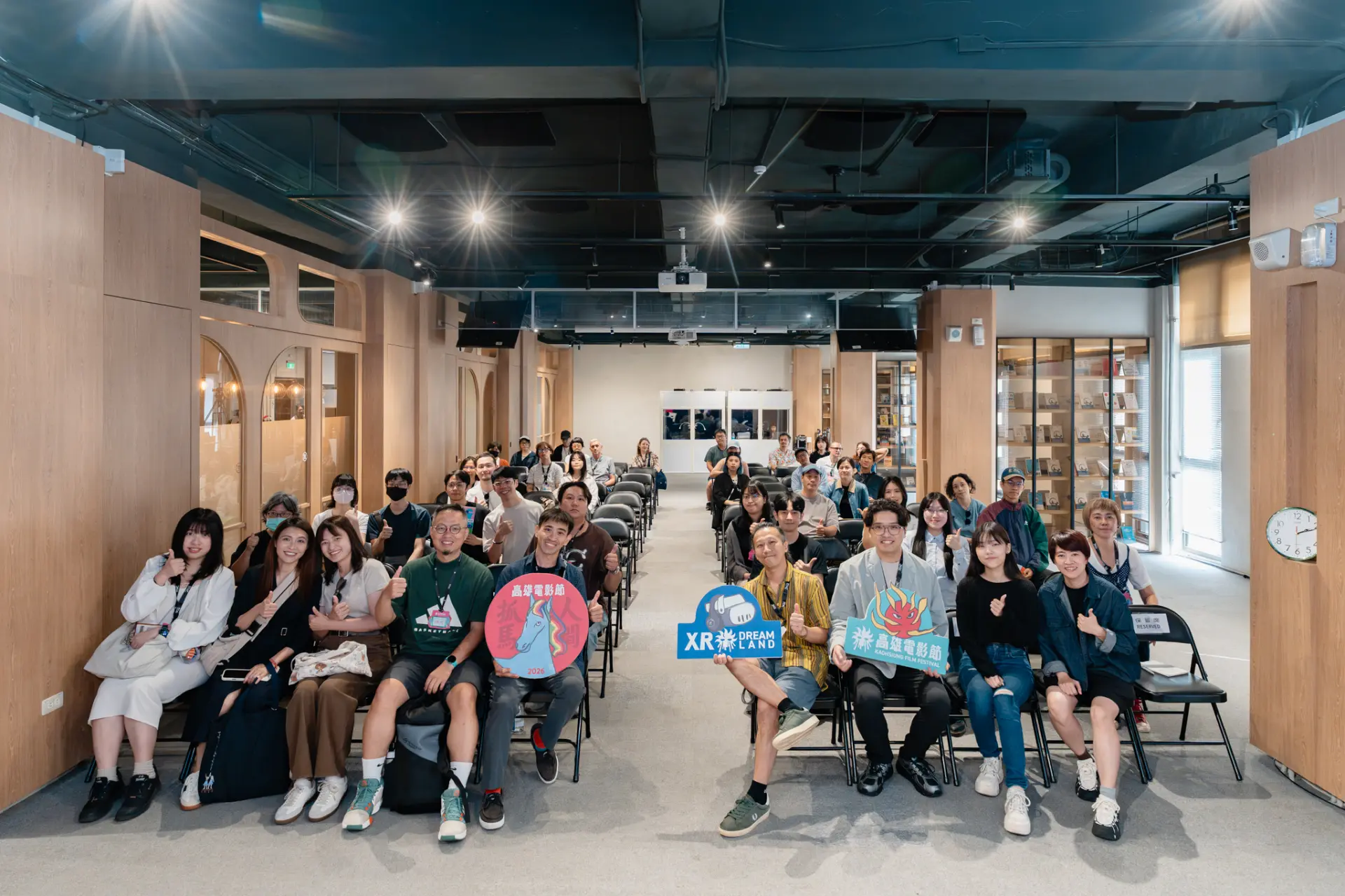
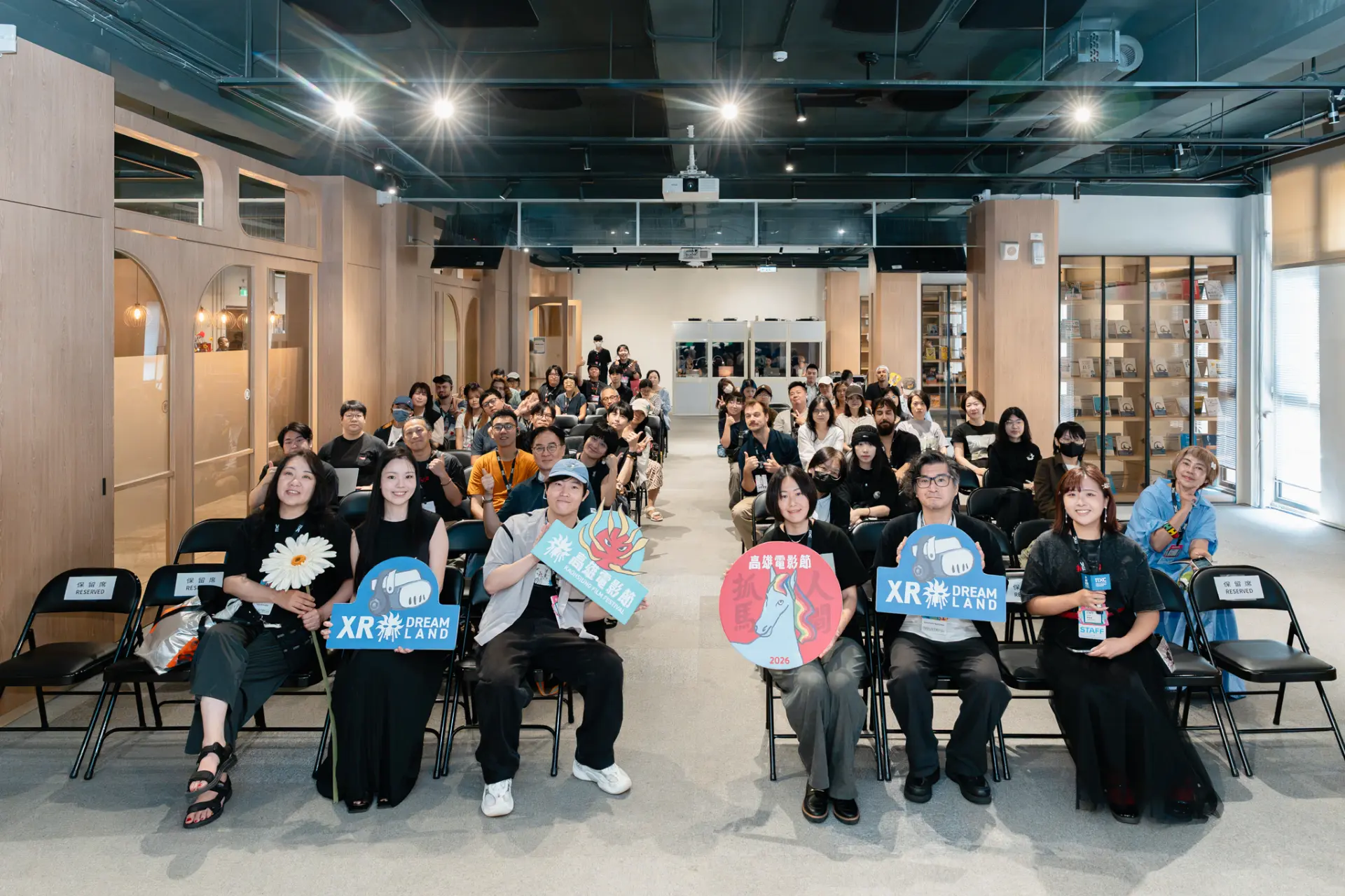
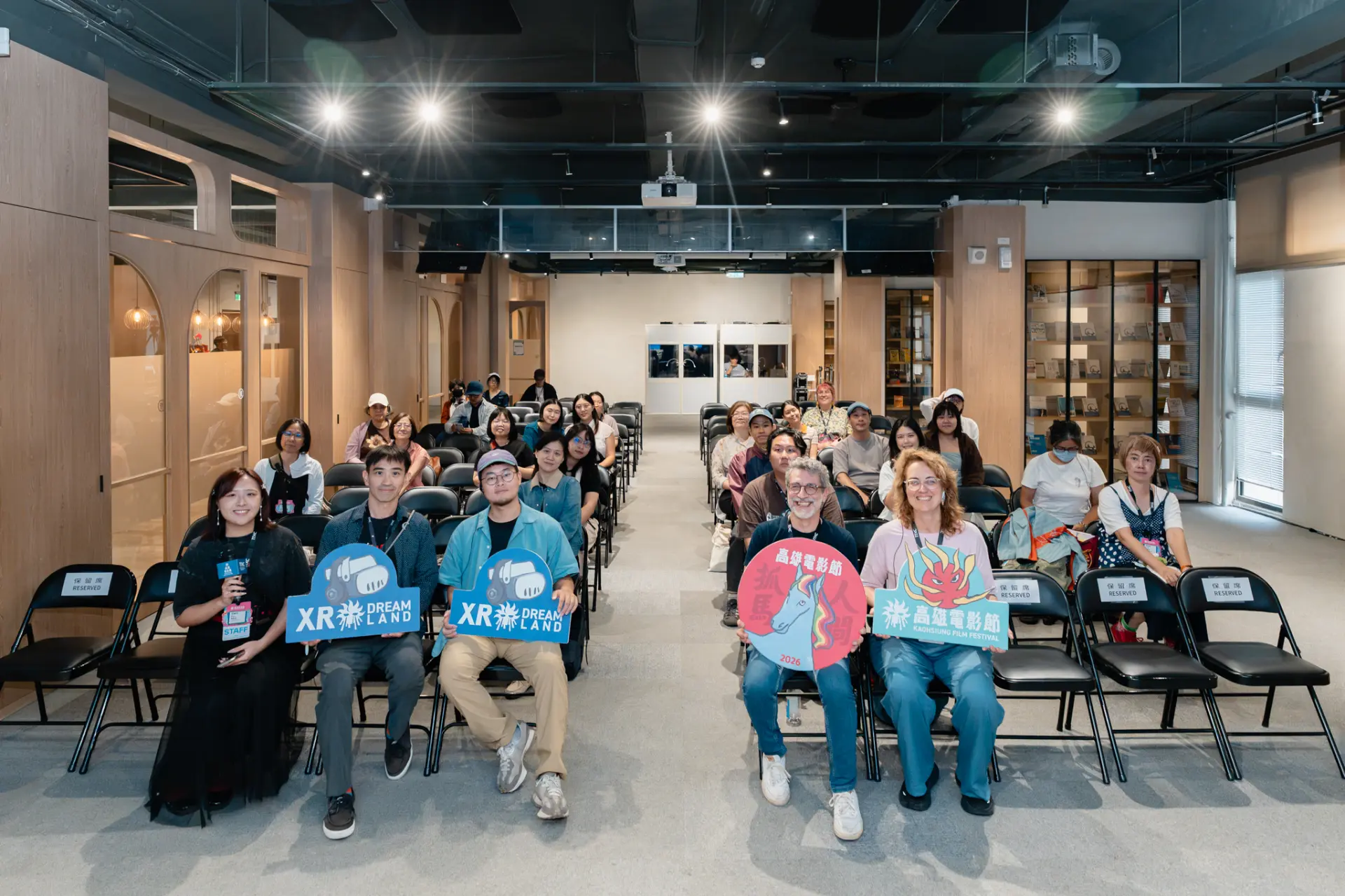
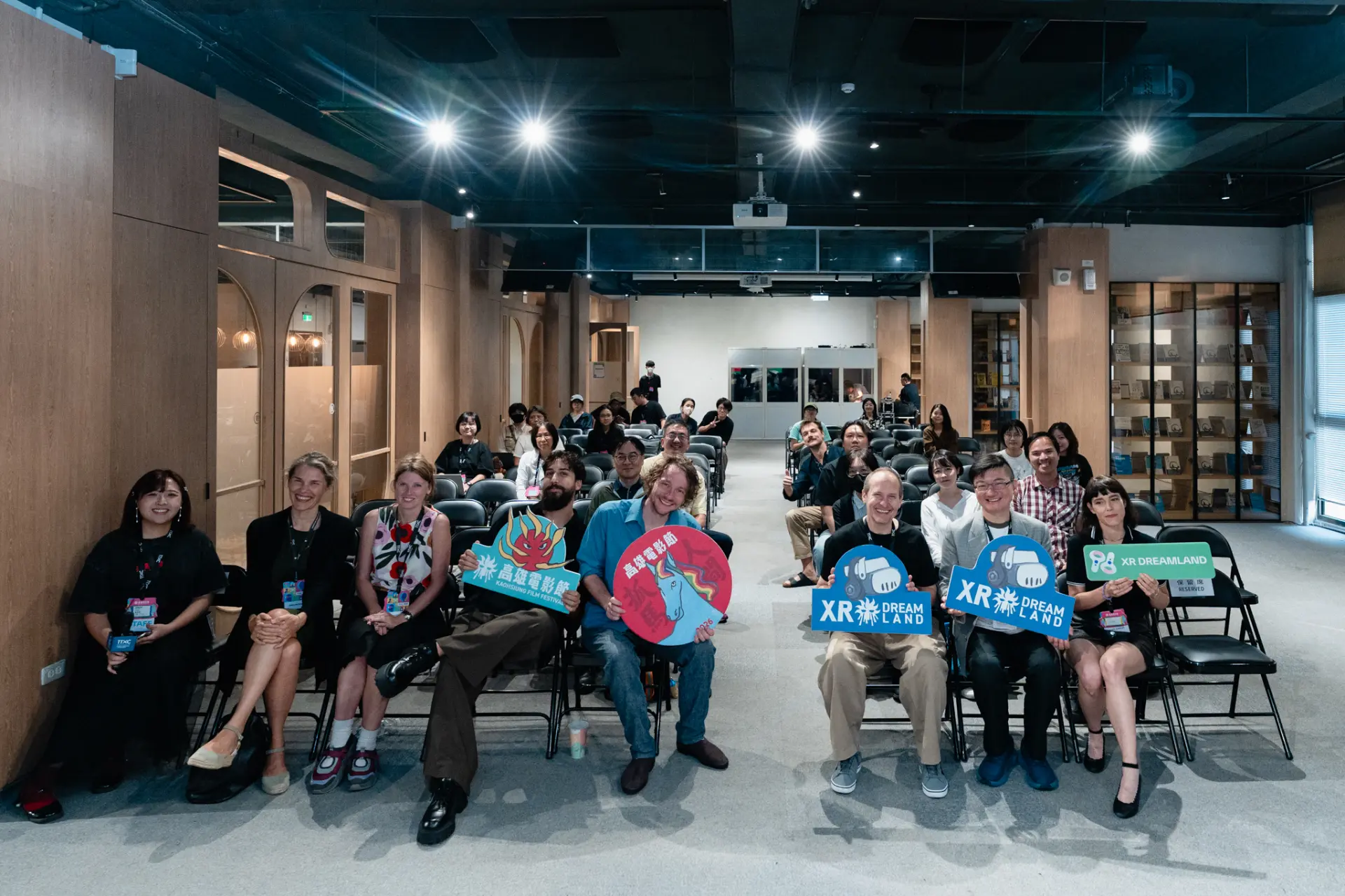
【 XR INDUSTRY EVENT 】When History and Exploration Meet Taiwan's LBE 2.0
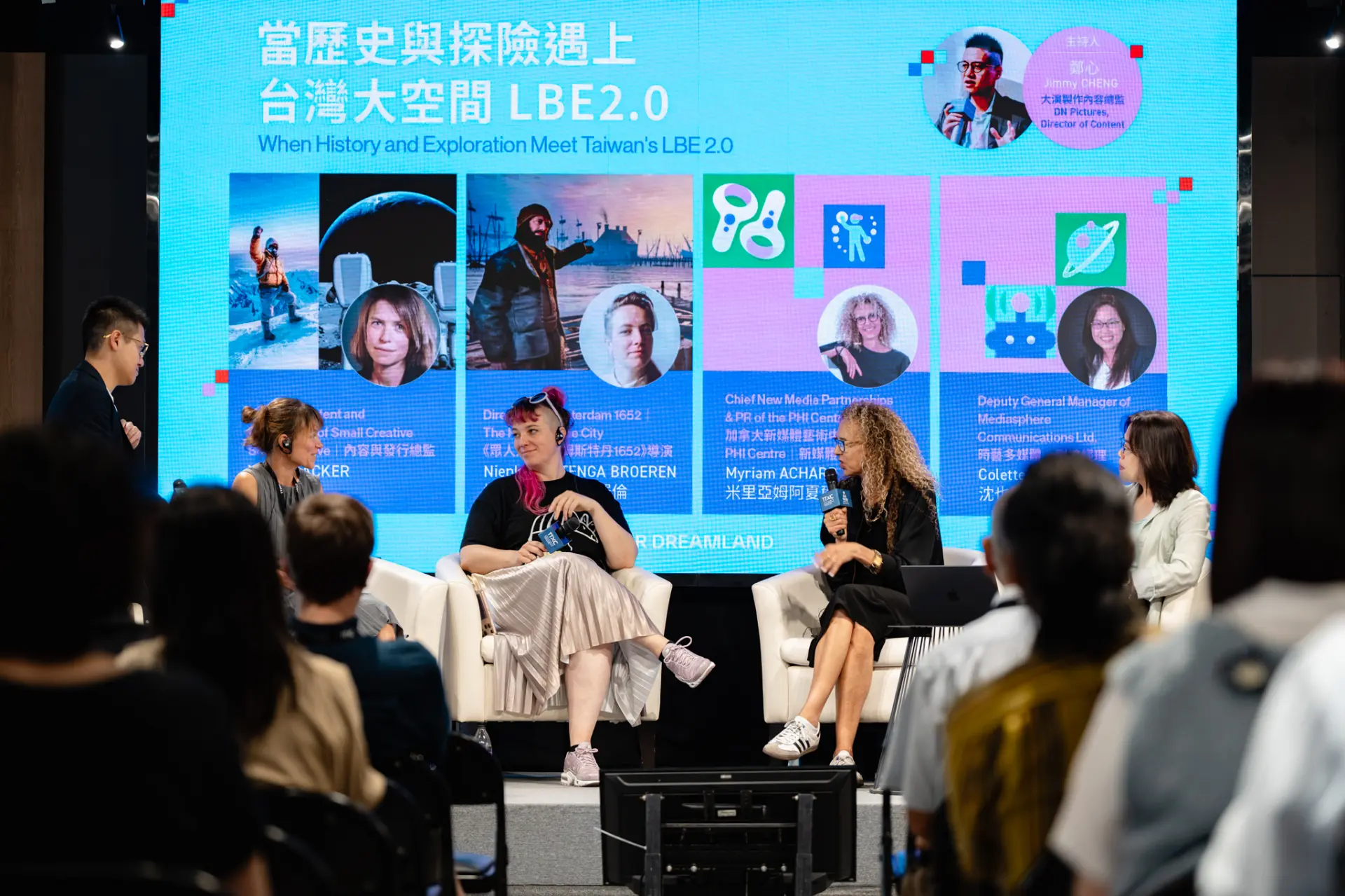
.Panelists
- Head of Content and Distribution of Small Creative|Voyelle ACKER
- Director of Amsterdam 1652|The Hands of the City|Nienke HUITENGA BROEREN
- Chief New Media Partnerships & PR of the PHI Centre|Myriam ACHARD
- Deputy General Manager of Mediasphere Communications Ltd.|Colette Y. SHEN
.Moderator
DN Pictures, Director of Content|Jimmy CHENG
___________________________________________________________________
As technology advances, the landscape of immersive entertainment is rapidly evolving. Location-Based Entertainment (LBE) venues are expanding globally, with Taiwan introducing its long-term free-roam VR venue earlier this year. Moderated by Jimmy Cheng, Director of Content at DN Pictures, this panel brought together industry leaders from Taiwan, Canada, and France to examine current and future market trends in LBE, as well as the potential for historical storytelling within Taiwan's LBE ecosystem.
Colette Y. SHEN, Deputy General Manager of Mediasphere Communications Ltd.
At the beginning of this year, Taiwan’s first multiplayer free-roam VR venue, "XR PLAYHOUSE," officially opened at Songshan Cultural and Creative Park in Taipei. Departing from temporary pop-up exhibitions, this venue operates on a long-term model. Its first title, Horizon of Khufu, had already drawn over two million visitors worldwide to critical acclaim from international media.
Over its eight months of operation, the venue has successfully drawn 47,000 visitors. While the venue’s capacity limit means its visitor numbers are lower than those of short-term touring exhibitions that often attract over 100,000 visitors, the figure suggests a positive trajectory for long-term operations. Based on 1,800 exit surveys collected on-site, the recommendation rate reached an impressive 97.7%. Notably, 60.6% of attendees were experiencing VR for the first time, and many visitors returned for a second visit later on. While navigating this emerging landscape, the team remains confident in sustaining operations and invites domestic and international production teams to collaborate on bringing knowledge and beauty from around the world to audiences through VR experiences.
Myriam ACHARD, Chief New Media Partnerships & PR of the PHI Centre
Founded 20 years ago, the PHI Foundation for Contemporary Art initially brought major contemporary artists to Montreal through large-scale exhibitions. In 2012, the establishment of the PHI Centre provided a dedicated venue for technology-driven art. By 2020, PHI had established its own creative studio, transitioning from a presenter to a producer. The studio’s debut experience, The Infinite (2021), took audiences on a journey to the International Space Station. PHI also runs artist residencies across music and visual arts.
Most importantly, PHI Contemporary will open in Montreal in 2029, which will showcase all their works under one roof without separating contemporary art from other forms of art, focusing squarely on art itself. Their core philosophy is to explore art without limitations. Operating as both a distributor and venue operator, PHI co-manages five distinct locations worldwide and hopes to collaborate with Taiwan in the future.
Nienke HUITENGA BROEREN, Director of Amsterdam 1652|The Hands of the City
Amsterdam 1652|The Hands of the City originated as a collaborative project initiated by local creators in Amsterdam for a venue called ENTR VR Museum. Rather than simply looking back at history, the experience leverages VR to allow audiences to collectively travel to different times and places, experience history firsthand, and perhaps even transcend themselves. The story transports visitors back to 1652, a bustling global city built along the riverbanks, where people of different skin colors gather in the public square, stepping into everyday life in the past and experiencing that world collectively. Spanning nearly 2,000 square meters in a prime location, the highly successful venue showcases this debut production while co-developing new content with partners in Montreal.
Voyelle ACKER, Head of Content and Distribution of Small Creative
Participating in the forum for the third time, Small Creative has steadily expanded its global operations since 2020, aiming to partner with experts across diverse fields worldwide. Dedicated to developing compelling content and varied narratives, Small Creative strives to reach diverse audiences. To achieve this, the company has standardized its operational workflows across engineering, tech, marketing, and distribution to ensure seamless remote execution, allowing projects to be deployed anywhere in the world.
Small Creative hopes to collaborate with teams of different sizes in the future and can accommodate both small and large venues, as well as touring exhibitions. The team is passionate about sharing good works with audiences globally. Their production,Everest, The First Ascent, has already been presented in London, New York, Nantes, Barcelona, South Korea, Japan, and Quebec, and they invite attendees at the Kaohsiung Film Festival to experience it firsthand.
Panel Discussion Highlights
Turning the conversation back to the Taiwanese market, the moderator opened by asking how panelists define commercial models suitable for Taiwan. Shen noted that as technology evolves, how people experience art is shifting, and virtual imagery is an undeniable reality. Mediasphere will continue introducing high-quality content, innovative formats, and new educational tools to Taiwanese audiences. Achard emphasized Taiwan's immense potential, noting that the best XR works in recent years have come from Taiwan. Beyond its robust creative ecosystem, Taiwan’s market is backed by TAICCA (Taiwan Creative Content Agency), making it a crucial strategic partner moving forward. Huitenga Broeren echoed these views, sharing that venues in Amsterdam are eager to showcase top-tier content and already have connections with VR production teams in Taiwan to unlock broader global markets. Acker highlighted the vast audience base in Greater China, pointing to the success of Mission to the Moon at the Science Museum in Paris (maintaining a daily viewing rate above 95%) and expressing confidence that high-quality content with educational value would be popular anywhere.
Addressing the recent influx of Chinese historical content in production and distribution, the moderator inquired whether new perspectives and genres are needed. Huitenga Broeren noted that from an artist's perspective, historical themes offer an accessible entry point that can also cross over into other genres like entertainment, with many works interconnected and complementary. Achard stressed that artistic quality does not automatically guarantee commercial success, underscoring the necessity of thorough market research. Acker drew a parallel to cinema, which started with broad mainstream appeal before diversifying into niche genres; LBE needs accessible, entry-level titles first to familiarize audiences with LBE before introducing more varied subjects. Speaking as a venue operator, Shen described LBE as an immersive medium for acquiring knowledge, transporting audiences to unreachable places like deep waters or ancient pyramids. While initial offerings naturally lean toward grand themes powered by technology, the market will gradually diversify to serve niche audiences and broader demographics.
In closing, the moderator asked each panelist for a final thought. Achard emphasized that venue collaboration is not merely an option, but an absolute necessity for the industry's long-term sustainability. Huitenga Broeren noted that relatively few artists from Amsterdam visit Taiwan because Taiwan has relatively few works, and suggested that co-productions and mutual exchanges could strengthen ties with Taiwan. Acker underscored that cross-platform integration relies on standardized production, stressing that neither producers nor venue operators can scale the market alone and that doing so requires global cooperation. Finally, Shen shared that title selection at Mediasphere relies on executive expertise and team experience without closed-door audience testing; instead, audience involvement is channeled into subsequent word-of-mouth marketing efforts